
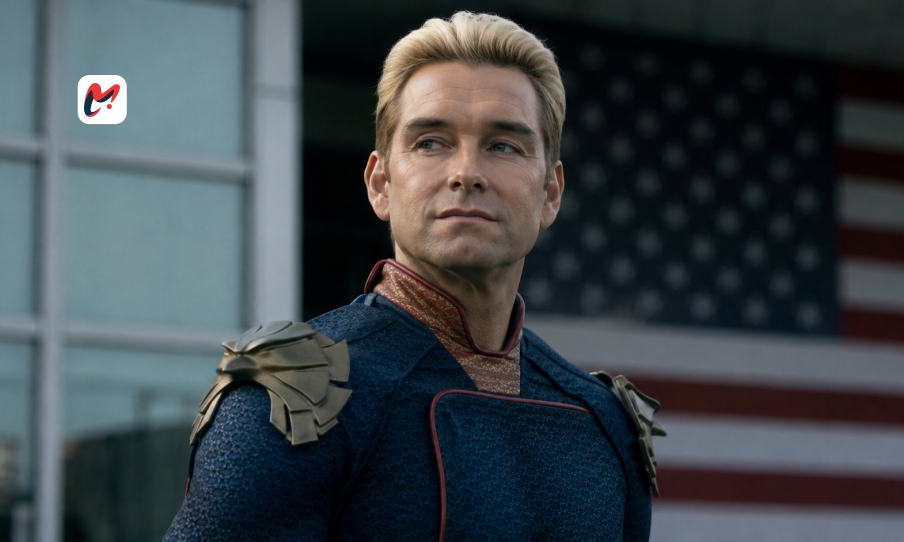
Superhero stories today look nothing like they did ten years ago. Instead of flawless do-gooders, we now get characters cracked open, messy, real. Sitting right at the top of this shift is one particular figure – cold, sharp, unsettling. He reflects what scares us most: fame gone toxic, money calling all the shots, patriotism twisted into something ugly. To see why people can’t stop watching him means digging through the pieces of a villain built perfectly for now.
The Myth of the Flawless National Hero
He stands tall, this main enemy from Vought International, dressed like a moving national symbol. A bright Hollywood grin cuts across his face, muscles built beyond human limits, meant to feel safe, familiar. Cloaked in red, white, and blue flair, he looks like power shaped by belief in one nation rising above all others. Built not just to fight villains but to sell toys, posters, loyalty without questions asked. People in that world see him as an unshakable shield against chaos. Behind the pose lies something sharpened by boardrooms – perfection carved out of profit goals.
What makes him so compelling isn’t the polished surface but what rages beneath it. Not protection – domination drives him, fueled by loneliness and a hunger for control. Beneath the calm grin hides someone ready to snap without warning. His presence pulls people in, even as they sense the danger lurking just below. That contrast – the charm versus the chaos – is what holds attention each moment he’s visible. One second he smiles, the next you wonder if everything will shatter.
A Result of Corporate Growth and Separation
What makes Homelander so twisted starts with how he came into the world – built in a lab, not born. No parents, just cold rooms where scientists watched his every move from day one. Alone most of the time, shaped by tests and control, not comfort or care. Feelings like kindness or connection? Never part of the lessons. Value measured only by performance, always pushed to be flawless, never fragile.
This deep-seated childhood trauma manifests as a profound, pathetic need for adulation. He is a god who desperately craves the approval of mortals, making him incredibly dangerous yet strangely pitiable. His villainy is not born out of a grand philosophical desire to reshape the world, but rather from a profound emotional stuntedness. When a being with the power to level cities possesses the emotional maturity of a petulant, insecure toddler, the resulting threat is far more terrifying than any standard alien invasion or cosmic supervillain plot.
The Terrifying Realism of Unchecked Power
What makes homelander truly resonate with modern audiences is how realistically his corruption is portrayed. In traditional comic book narratives, villains want to conquer the world or destroy it for abstract reasons. Here, the horror comes from the mundane reality of what happens when a deeply flawed individual faces zero consequences for his actions. He slowly realizes that his power places him entirely above the law, above corporate control, and above morality itself.
As the narrative progresses, we witness a chilling psychological evolution. The character transitions from a reluctant corporate puppet who tries to maintain his public standing to an unchained tyrant who realizes that fear is just as effective as love. The moments where he tests the boundaries of his freedom—discovering that he can commit atrocities and still receive the applause of a polarized public—feel deeply uncomfortable because they mirror real-world dynamics of power, demagoguery, and media manipulation.
A Cultural Touchstone for the Modern Era
Ultimately, the enduring fascination with homelander stems from his status as a cultural touchstone for our current era. He represents the dark side of the superhero mythos, proving that absolute power combined with deep emotional insecurity leads to inevitable tyranny. He is a warning about the dangers of idolatry, whether that idolatry is directed toward politicians, celebrities, or corporate entities.
The character succeeds because he is a multi-dimensional portrait of a monster created by modern society. We are drawn to his story not because we want him to win, but because we are transfixed by the slow, inevitable collapse of his sanity. He remains one of the most compelling figures in modern fiction because he forces us to confront a terrifying question: if someone truly had the power of a god, why would we ever assume they would choose to be good?