
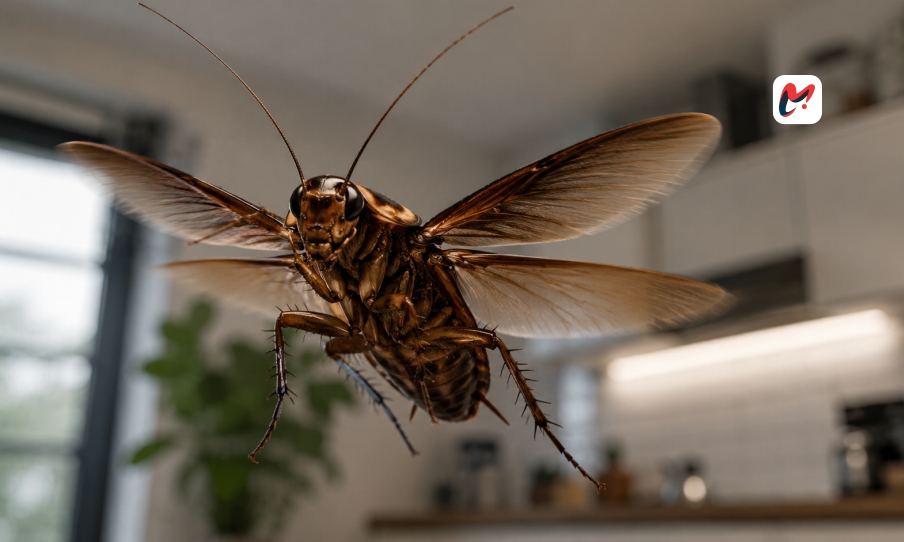
Out of nowhere, a huge bug zipping through the air can send anyone scrambling. Not just creepy when it crawls – wings make things worse. That split-second leap into flight shocks most folks mid-step. What was ordinary suddenly turns chaotic. A quick escape by the roach shifts everything. Knowing why they fly helps tip balance back inside your favor. Biology holds clues hidden in their movement. Reaction starts with awareness, nothing more.
The Biology of Airborne Panic
Some bugs at home can fly, others cannot, it really comes down to what kind they are and where they live. Wings on the German cockroach might suggest flight, yet poor muscle control keeps it grounded, only managing quick drops when startled from above. Instead of flying smoothly, these ones tumble more than soar despite having wing structures. But take the American or Smokybrown types – those manage proper airborne movement thanks to strong, working wings meant for lasting lift.
Wings aren’t for sightseeing with these bugs – staying alive is the real reason they lift off. Moving through the air burns serious fuel, so most roaches stick to the floor unless something pushes them up. When it gets hot and sticky outside, that’s usually what sets them off. Heat ramps up how well their muscles work, making flight easier, which sends them searching for shade or less brutal spots overhead.
What Holds People Down or Helps Them Rise
Summer heat stirs things up. Heat builds, then lingers thick in the air. That warmth isn’t just uncomfortable for people – it shifts something deep inside these critters. Their bodies run on outside temperatures, so when humidity clings and thermometers climb, systems rev faster. Movement comes easier now. Energy pools where there was little before. With that surge, lifting off feels less impossible. The weight they carry suddenly seems lighter. Upward motion follows naturally. Airborne life begins not by choice – but because conditions cross a hidden line.
Beyond seasonal shifts, immediate danger is another powerful trigger for flight. If you startle an insect with a sudden movement, a flashlight, or a chemical spray, its natural defense mechanism kicks into high gear. Instead of scurrying into a dark crevice, a panicked flying cockroach might launch itself directly into the open air to escape the perceived threat. Because their flight control mechanisms are somewhat primitive, their flight paths often appear chaotic and unpredictable, frequently resulting in the insect unintentionally colliding with the very humans they are trying to avoid.
Simple Strategies to Fortify Your Living Space
Preventing these unsettling airborne encounters requires a proactive approach centered on home maintenance and exclusion techniques. Since these pests are heavily attracted to moisture and organic waste, keeping a pristine living environment is your strongest line of defense. Ensure that kitchen counters are wiped clean of food residue every evening, store pantry items in airtight containers, and never leave pet food sitting out overnight. Regularly clearing drains with an enzymatic cleaner also eliminates the organic buildup that serves as both a food source and a breeding ground.
Because these large insects often live outdoors in mulch, woodpiles, or sewer systems, they must find a physical opening to enter your home. Inspect the exterior of your property for any cracks in the foundation, gaps around utility pipes, or damaged window screens. Installing tight-fitting door sweeps on all exterior entrances can significantly reduce the chances of a stray flying cockroach wandering inside during a hot summer evening. Additionally, keeping outdoor vegetation and tree branches trimmed away from the roofline prevents them from dropping down onto your home and finding entry points through attic vents.
Long Term Management and Peace of Mind
When preventive measures fail and you find yourself facing an active intruder, remaining calm is essential for swift resolution. Swatting blindly at an airborne insect usually exacerbates the panic and drives the pest into a hidden, inaccessible corner. Instead, wait for the insect to land on a flat surface where its movement becomes far more predictable and manageable. Utilizing a vacuum cleaner with a long hose attachment is an exceptionally clean and efficient way to capture the insect from a safe distance without making direct contact.
If you notice that these encounters are becoming a recurring theme rather than a rare, isolated event, it may indicate a larger underlying infestation nearby. In such scenarios, relying solely on standard retail sprays might only scatter the pests deeper into the walls. Professional pest control technicians possess specialized knowledge and targeted baits that address the root cause of the problem, ensuring that your home remains a secure, peaceful sanctuary free from the dread of a sudden flying cockroach interruption.