
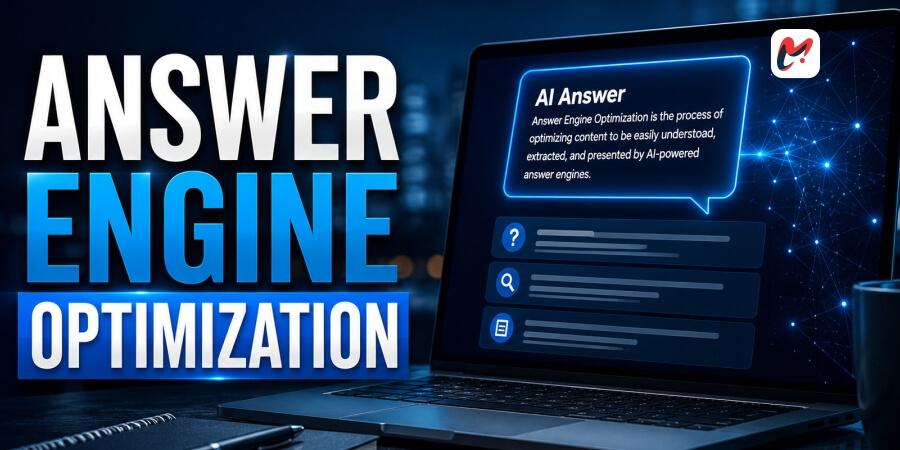
The nature of search has changed from merely displaying blue links to allowing for discussions around various topics through conversations. An individual seeking the best accounting application, treatment for cancer, travel destination, or definition of a technical topic will not waste time scouring through thousands of alternative sources before making a decision. They could opt for Google’s AI Mode or ChatGPT, an artificial intelligence-powered search engine, and receive an instant comprehensive answer while being given reference sources to look up.
The transformation is already significant. According to Google, AI Overviews are available in not less than 200 countries and territories and over 40 languages. Furthermore, AI overviews have seen a growth in searches for the US and India over 10%. ChatGPT Search can provide users with references and URLs. Thus, for publishers and marketers, the question arises as to how AI determines which sources to include and which ones to exclude.
What Answer Engine Optimization Really Means
Optimizing the answer engine can be understood as the formulation of the sort of content that provides value, is comprehensible, and enjoys credibility to be displayed by answer-generating processes. Answer engine optimization has some points in common with regular search engine optimization, the difference being that while page ranking in the case of regular SEO focuses on keywords, answer engine optimization aims at preparing a page for usage by AI engines.
Such an approach requires a particular method of structuring content. AI engines will have more valuable resources if the page clearly deals with the subject and backs the important statements with credible evidence to provide answers to connected questions. Traditional search engines have been assessing help sources’ relevance and authority, and now they have to decide which answer-generating content is more capable of producing relevant answers.
Thus answer engine optimization implies not searching for some secret algorithm but proving to be trustworthy source. Google is sticking to this strategy as well by encouraging users to visit useful websites with authentic content and ensuring that OpenAI informs that its ChatGPT Search utilizes only publicly accessible web pages and giving advice on not blocking OAI-SearchBot.
Why the Number One Ranking Is No Longer the Whole Story
SEO in the conventional sense worked with a clear mental model. Any website that appeared on top for an important query was likely to get visitors – and thus business profits through traffic.
With AI-generated response, this logic is changing. The information one might need can be obtained without clicking any search engine link.
This trend has already shown itself. According to Pew Research Center, their survey of 900 Americans showed that в 8% of cases click on the form of a traditional search result appeared after AI-generated summary of the search, while in the other 15% traditional click took place before AI-generated summary appeared. On the contrary, only 1% of cases had SEO-generated answer that inferred any link in the response. One more study by 2026 showed that AI-generated summaries diminished clicking on regular links by 39.8% and increased zero-click search by 34.5%.
In such a way, one can conclude that what said above means that answer engine optimization is different from regular SEO. Thus a brand may gain some visibility in answers but overcome the decrease in click-throughs.
Therefore, being mentioned in AI-generated summary may serve as a good indicator of brand visibility even though overall traffic measurement impact is difficult to measure.
The New Goal Is to Become the Source
The leading rationale behind answer engine optimization does not lie in the fact that SEO is no longer effective but rather in the fact that search engines are moving towards the answers format rather than the information gathering format.
Search engines are still important, but being number one around one request does not help companies if users receive the answers to user inquiries from their competitors’ research. The companies that win are those who make the information easy to read and understand, trustworthy, and appropriately used.
This is the reason why answer engine optimization should be regarded as a broader aspect of content generation and not as a method. The brands that would benefit from the given method are those who are able to provide answers to the questions legitimately, who know how to demonstrate their expertise, and who create original content.
Blue link may not disappear from the search engines as well but rather gain another layer above. You can get on the page if you are ranked #1. You can directly contribute your knowledge to the solution by being cited.