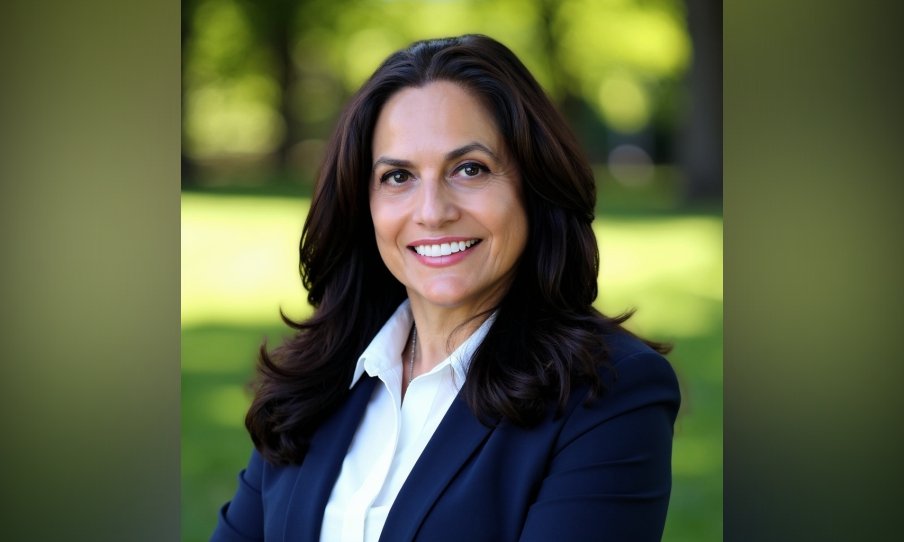

Dan Osborn and the Rise of Independent Leadership Rooted in Experience, Accountability, and Everyday Concerns
American politics has always been influenced by institutional politics, political networks, and competition between political parties. However, sometimes candidates appear who come from a non-political environment and represent a different vision of public leadership. Dan Osborn is an example of such candidate, who brings his professional experience based on military service, factory work, and labour union work into political debates.
Osborn’s experience is based on the idea that public leadership must be in touch with the reality of average people’s life. He did not create his political identity but his professional identity during many years of practical work and social commitment. His professional experience is very important for him in politics.
From Military Service to Industrial Leadership
Prior to entering the realm of politics, Dan Osborn carved out a career characterized by service and technical skills. After graduating from Roncalli Catholic High School, he entered the service of the United States Navy where he served for four years on the USS Constellation. This period of his life exposed him to the dynamics of discipline, teamwork, and working responsibilities.
He later served in the Nebraska Army National Guard to further his relationship with public service. He started working in 2004 as an industrial mechanic in the Kellogg’s manufacturing plant in Omaha, Nebraska. In this capacity, he was exposed to the dynamics of industrial operations, work conditions, and the problems that workers face.
His professional experience slowly evolved into one of leadership in the labor movement as he took the presidency of Bakery, Confectionery, Tobacco Workers and Grain Millers International Union Local 50G, representing the interests of workers and discussing matters of compensation, job security, and protection of workers.
Labour Advocacy and the Importance of Collective Representation
One of those moments that shaped his career took place when he was part of the Kellogg’s strike of 2021 that took place in Omaha.
Dan Osborn served as a leader during that 77-day long strike as he assisted workers with the organisation of their efforts to achieve improved employment conditions. That event made him realise the challenges related to labour representation and managing the pressure that accompanies any industrial struggle.
For Dan Osborn, labour representation was not only about the position. He had to understand the economic situation of his constituents, acknowledge their value as experienced workers, and make sure that their needs were properly addressed.
These events also made him aware of the issues that relate to economic policy. Namely, problems related to wages, company responsibility, manufacturing jobs, and industrial cities became integral parts of his public agenda.
Entering Politics with an Independent Perspective
It was in 2024 when Dan Osborn became an active participant in the American politics by running for a position of senator in United States from the State of Nebraska as an independent candidate against Republican incumbent, Deb Fischer. The campaign itself was of particular importance since it questioned certain stereotypes of election competition in the state with a strong Republican voting background.
Though Dan Osborn failed to be elected, the results showed that an independent candidate with a working class professional background can become quite popular among voters. It also opened up discussion about political representation, voter expectations and the place of independent movement within the party establishment.
Osborn’s second attempt to become a US Senator in 2026 was also an occasion to put forward his political agenda. This time he stood up against Republican incumbent, Pete Ricketts. The campaign was dedicated to such issues as economic fairness, interests of working families, small business owners, agriculture and influences of political/corporate establishments.
Despite the competitive campaign, Dan Osborn still lost the election to Pete Ricketts, who won on November 4, 2026.
A Different Understanding of Political Representation
Another important element of Dan Osborn’s public persona is his advocacy of the concept of independent political activism. It is a strategy that challenges whether true political representation necessarily comes from within party frameworks.
It is also indicative of an attempt by him to tie the debate over national policy to the realities of the community. Economic security for manufacturers may imply stable job security and remuneration. For farming communities, it may include stable markets, trading conditions, and sustainability of family farms in the long run. For small businesses, it may include lower operational expenses and favorable business environment.
This shows the need for looking at public policies based on how it affects the people.
The Continuing Significance of an Independent Voice
The case of Dan Osborn shows that success in elections is not the only way to participate in public affairs. The two Senate elections made it possible to make independent candidacies more visible and showed how candidates can have an effect on national politics even when they do not belong to any well-known political parties or associations.
At the same time, the professional experience of Dan Osborn in the military service, industry, and labour organizations provides him with an interesting view of the world because it was obtained outside of the usual political environment.
The problem faced by Dan Osborn is the ability to transform professional experience into political movement which would attract support from other social groups and would be able to unite citizens of different ideological persuasions.
Despite the fact that Dan Osborn did not become a senator, he helped start a public discussion about political independence, economic representation, and expectations from politicians among citizens.
In conclusion, the case of Dan Osborn may be characterized as a transition from the military service and industrial sphere of work to the politics and labour relations.