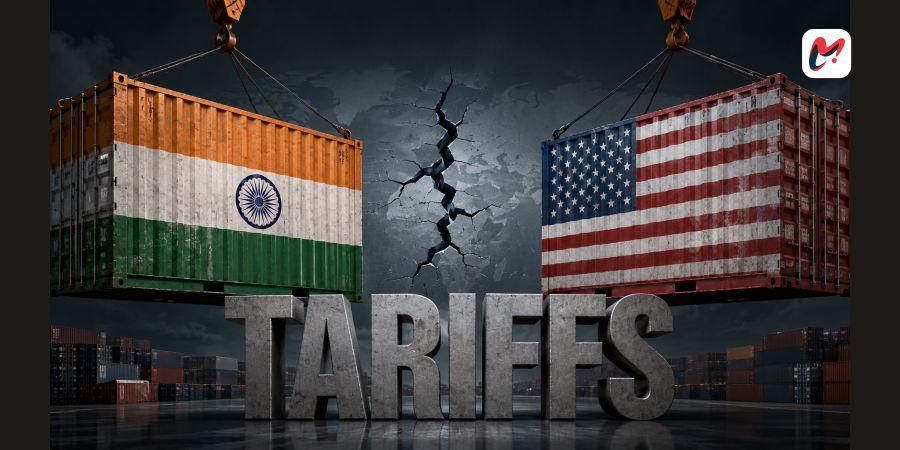
Tariffs are typically defined as taxes that apply to imported merchandise, but the ongoing conflict between India and the U.S. is raising tariffs to a whole new level. The dispute is a proving ground for businesses to see how resilient modern supply chains can be when faced with a confluence of politics, energy security, and commerce. Not only are India tariffs no longer just a buzzword for economists, but they are also forcing companies to rethink where to produce their goods, from where to source raw materials, and which markets to trust.
The timing is also very specific: over the past few years, India has made itself known as one of the fastest-growing production epicenters in the world, bringing in companies that want to substitute China for something more dependable. However, the new tension with the U.S. has just added more uncertainty to a situation that, until now, seemed quite optimistic.
When Trade Becomes a Strategic Tool
The recent round of tariffs set by India was achieved following a tough round of negotiations between New Delhi and Washington regarding market access, agricultural imports, and India’s continued purchase of Russian oil. The US first announced its reciprocal tariffs and then increased tariffs on several Indian goods, which resulted in a trade agreement becoming a well-publicized stalemate.
The disagreement indicates that there is a bigger shift in trade. Countries are increasingly employing tariffs not just to protect domestic industries but also to influence foreign policy choices, which alters the way business leaders think about risk. Rather than asking where it is cheapest to produce something, businesses are asking which trading relationships are stable in five years.
Why Supply Chains Are Paying Attention
For many multinational companies, India became an element of the strategy of “China Plus One”, which refers to the idea of distributing manufacturing facilities across different countries instead of relying on a single country for manufacturing. Industries that benefit from such a transformation include electronics, textile production, automotive components, and pharmaceuticals.
However, with the new India tariffs, the possibilities are becoming more complicated. If exporters are faced with additional costs when exporting to the USA, the manufacturers may reconsider their investment strategy. It is possible that part of the production will start moving to Vietnam and Mexico, or the companies will simply look for alternative suppliers rather than concentrating their operations in one country.
The paradox is that supply chains cannot start working overnight as it takes years to create factories, train employees, and create an entire ecosystem of suppliers. That is why it is improbable that the businesses are going to move their operations out of India completely but they may certainly become more careful about putting all their efforts into one country only.
The Industries Feeling the Pressure
Certain industries are under more threat than others. The textile, diamond and jewelry, fishery, and furniture industries rely significantly on American trade.
In 2024, India exported goods worth almost USD 87 billion to the USA. This makes the USA the largest export market for Indian goods.
Experts predict that continuing India tariffs may result in reduced shipping from some industries due to extended tariffs.
Surat illustrates this point well. The diamond industry of this city has been under pressure from these tariffs and may face reduced demand.
However, some industries are better off than others. Pharmaceuticals, for example, seem to be less affected due to their importance for the healthcare system.
A Surprising Twist: Trade Has Not Collapsed
Although the ongoing tensions within India Tariffs may captivate attention, one figure speaks volumes. The U.S. market still attracts almost 20 percent of India’s exports which has remained relatively constant through the years of tension.
This resilience of trade implies that the two nations have a solid relationship. American companies promise that they depend on Indian suppliers, while Indian exporters still deem the U.S. market as viable despite growing costs. The countries prove that their business relations cannot be shaken by a single policy.
This is why the two countries are still in talks with each other. News reveals that both governments are negotiating the approval of a new bilateral trade proposal.
What This Means for Global Business
The important lesson is relevant, not only for India and the United States. Companies focus on creating their supply chains based on resilience, rather than efficiency. Resilience means the presence of multiple manufacturers, distribution of production locations across multiple regions of the world, and flexibility in terms of inventories to adapt to sudden changes in regulation.
The discussion on the Indian tariffs illustrates a wider truth. Geopolitical developments in the world can affect business planning just as fast as the situation on the market. A plant that was deemed well positioned last year may find itself in costly situations due to different political issues.
This is already changing many companies’ approaches in their boardrooms. Companies are no longer looking to substitute one manufacturing hub with another but build regional production networks where manufacturing can be redirected depending on changes in trade laws. This is more expensive but provides a better protection against political risks.
Can India Turn This Into an Opportunity?
India continues to have many advantages. It has a large population, a growing digital infrastructure, and a growing domestic market, which makes it appealing for investment today. It seems that the Government is ready to negotiate and protect the sensitive sectors, such as agriculture and dairy, at the same time complicating the negotiations.
Eventually, this episode with India tariffs might push the country closer to developing its trade ties with Europe and Southeast Asia and other emerging markets. Diversification works in both ways. Companies aim to have as many suppliers as possible, while countries want to have as many destinations for exports.
The change can even improve the position of India over time. It is true, but it will take some diplomatic effort to reach this point and be able to invest a lot in manufacturing competitiveness.
Overall, the history of India Tariffs is about more than taxes imposed on foreign goods. It is about turning yet another page in the history of the world where trade, politics, and national strategy are intertwined. The modern global supply chains models are not built only on costs now; they are created in a way that relies on trust, adaptability, and flexibility in case governments redraw the rules.
Read Also : Holly Rowe: The Voice Behind a New Era of Sports Storytelling