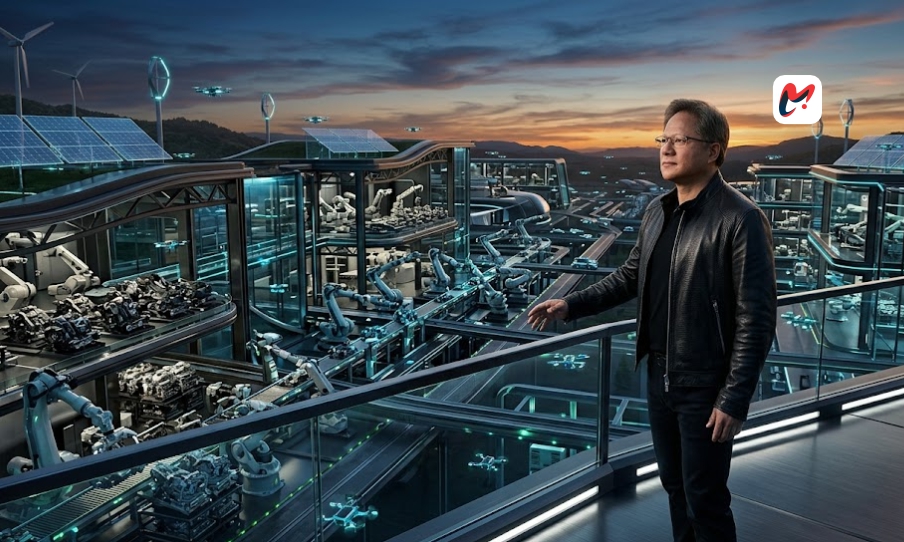
Right now, Jensen Huang – originally from Taiwan, later building his career in the U.S. – leads NVIDIA straight into a wave transforming how industries use artificial intelligence. By 2026, massive players in manufacturing start running full-scale operations on graphics-processing units once mostly seen inside computers. During a crowded tech gathering in San Jose that spring, Huang showed off chips built specifically for factory-level tasks, paired with digital modeling tools mimicking entire assembly processes before anything physical moves. Because of this shift, car factories adjust workflows faster, metal foundries track heat output minute by minute, while chip producers catch glitches seconds after they form. Instead of treating smart systems like an extra layer stacked onto old machines, companies treat them as essential as power switches or conveyor belts. Real results appear quickly: less wasted fuel, fewer breakdowns, tighter control across sprawling sites where even small delays used to ripple outward.
Out there past the circuits and chips, Huang connects with companies automating factories – mixing NVIDIA’s AI tools built on CUDA into robot controls along with smart sensor setups. Some users see small wins that still matter: output climbs by 10 to 20 percent, power use drops 15 to 30 percent, breakdowns get diagnosed quicker too. Slowly, these outcomes back up his idea of a factory run through software – one where digital twins test changes ahead of time while prediction engines cut down hands-on fixes.
Out beyond the rush of money chasing AI hardware and factories coming home, Huang moves differently – one of the few tech bosses who talks to cloud giants, silicon labs, and old-school plants like they’re all part of one machine. He sells artificial intelligence as something that gets real work done, not just noise at conferences, which is why company leaders now see NVIDIA as a core piece of their future plans instead of another name on a procurement list.