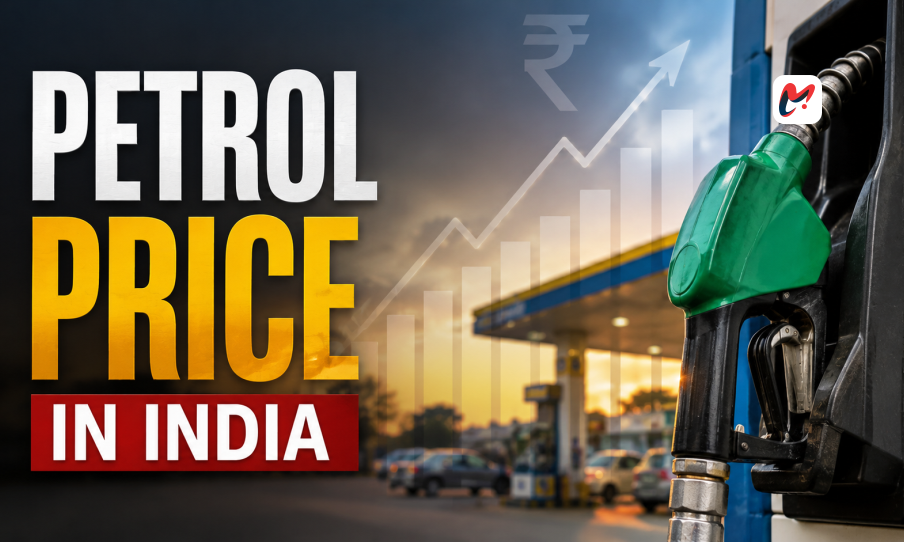
Right now, how fuel prices shift plays a big role in the country’s money talks. Into 2026, what petrol costs across India draws sharp attention, caught between world tensions and local tax choices. People driving daily, along with companies moving goods, feel every change at the filling station – it shapes spending and pushes up living costs. Behind steady numbers, even when overseas markets jump, lies complex oil math plus behind-the-scenes policy moves by top leaders.
The Geopolitical Landscape and Global Crude Dynamics
Out here, what really moves India’s petrol rates is how much crude oil costs globally. Lately, big trouble hit key shipping lanes – especially near West Asia. Starting early in 2026, rising conflict began messing with traffic through the Strait of Hormuz, where about one out of every five global fuel shipments passes. Because of that squeeze, prices for Brent crude shot up, sometimes jumping past $110 a barrel.
Most of India’s crude oil comes from abroad – close to ninety percent. A squeeze on global supply sends costs soaring right away for local refineries. Still, what you pay at the pump stays steady more often than not. That gap appears because officials step in, aiming to soften the blow for everyday people. World turmoil hits wallets slower thanks to deliberate policy choices behind the scenes.
Tax Systems and How States Collect Revenue
What stands out about how fuel costs are set here? It comes down to layers of taxes shaping the final number at pumps. Base cost sits underneath, then shipping fees pile on top, followed by national tax cuts from Delhi meant to ease pain at the till. State taxes stack higher still – each region sets its own rate, so one city might pay far more than another nearby. Even as federal levies drop to historic floors, local differences keep prices uneven from place to place. That patchwork means location decides much of what drivers ultimately face.
For instance, a resident in New Delhi might find the petrol price in india significantly lower than a consumer in Mumbai or Hyderabad. This discrepancy is largely due to the fact that fuel has not yet been brought under the Goods and Services Tax (GST) regime. Without a uniform tax structure, each state adjusts its levies based on its own budgetary requirements, making the cost of mobility a regional variable rather than a national constant.
Financial Strain on Oil Marketing Companies
While the retail rates have remained relatively stable over the last few months, this stability comes at a significant cost to state-run Oil Marketing Companies (OMCs). Entities like Indian Oil Corporation, Bharat Petroleum, and Hindustan Petroleum are currently operating under immense financial pressure. Reports suggest that these companies are incurring substantial under-recoveries, effectively losing money on every liter of fuel sold to keep the petrol price in india affordable for the public.
Union petroleum ministers have highlighted that these OMCs are losing hundreds of crores daily. This “price freeze” is a double-edged sword; while it prevents a sudden spike in transportation costs and food inflation, it weakens the balance sheets of the energy giants responsible for the nation’s energy security. If global crude remains elevated, the sustainability of maintaining the current petrol price in india will become a critical challenge, potentially leading to a calibrated price hike in the near future to ensure these companies can continue their infrastructure and refining operations.
Future Outlook and the Shift Toward Alternatives
Looking ahead, the trajectory of the petrol price in india is likely to remain tied to the duration of international conflicts and the government’s ability to maintain fiscal cushions. However, there is a growing consensus that the era of cheap fossil fuels is drawing to a close. To mitigate the impact of external energy shocks, the government is aggressively pushing for Ethanol blending and the adoption of Electric Vehicles (EVs). By diversifying the energy basket, the nation hopes to reduce its reliance on imported crude, thereby gaining more control over the domestic petrol price in india.
Furthermore, the strategic petroleum reserves are being expanded to act as a buffer against supply chain disruptions. In a world where energy is often used as a tool of diplomacy and war, creating a domestic safety net is essential. For now, the consumer remains protected by a thin veil of subsidies and tax cuts, but the underlying volatility of the global market suggests that the petrol price in india will continue to be a dynamic and evolving story throughout the decade.
Navigating the Road Ahead
As we move further into 2026, the focus remains on finding a “sweet spot” that protects the economy from inflationary spirals without bankrupting the energy sector. The current petrol price in india is a testament to the complex balancing act of a developing economy. Whether it is through further duty cuts or a slow transition to green energy, the goal is clear: ensuring that the wheels of the nation keep turning without putting an unsustainable burden on the pockets of its citizens. While the numbers on the fuel station boards might seem static today, the forces moving behind them are more active than ever, shaping the future of Indian mobility and economic resilience. Understanding the petrol price in india is, ultimately, understanding the pulse of the nation’s economic health in an uncertain world.