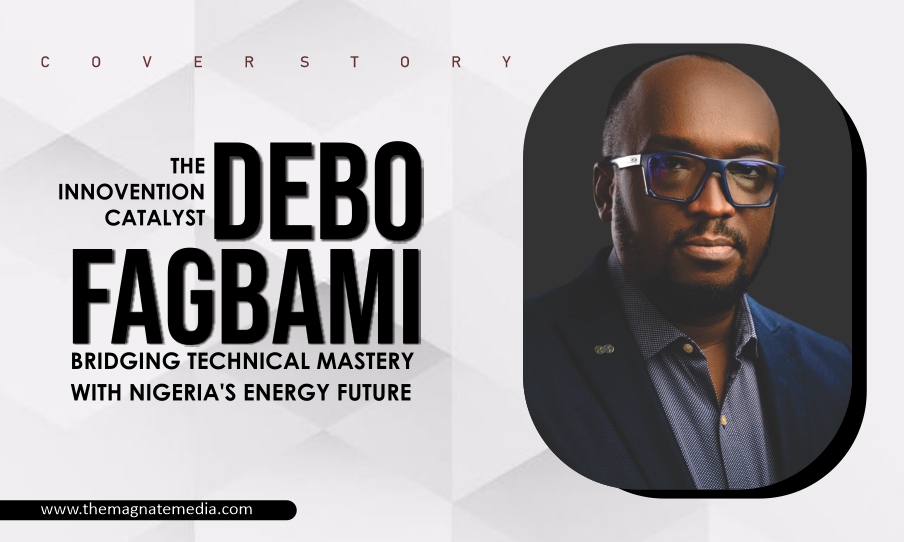
The current era finds the global energy market at a sharp turning point. Today, the transition from traditional fuels to cleaner alternatives has moved from a distant goal to an everyday operational reality. As this environment becomes high-stakes, the ultimate measure of a leader is now the ability to bridge this existing gap between legacy infrastructure and future energy systems. Debo Fagbami, the Chief Operating Officer of Xenergi Limited, has emerged as that focal point at the center of this shift in the West African energy corridor. His three decades of experience across the entire energy value chain enabled him to transition from the grit of oilfield operations to the precision of executive management. A testament to the power of technical mastery and integrating a visionary mindset has been the hallmark of his journey.
The operations under Debo’s guidance are a sophisticated blend of upstream grit and midstream innovation. His background in cased hole work over operations, oil well logging, formation evaluation and permanent down hole gauge installations provides him with a rare perspective on the physical realities of energy production. His deep technical immersion allows him to easily journey on via wireless monitoring of oil and gas assets and infrastructure, gas conversion plants, and many more complex systems with a level of clarity that few can match. He, having spent years in the fields of industry giants such as Shell, Chevron, Agip, and Texaco, learned to gauge the mechanical heartbeat of the sector. Yet, today, his full concentration is on the potential of natural gas, easily the best choice of a pathway to a more sustainable future.
Also, as a past Chairman of the Society of Petroleum Engineers, Nigeria Council, Debo’s influence extends beyond the corporate walls of Xenergi. He is a leader who understands that driving innovation requires a mastery of change management and the ability to facilitate value challenges. In the present world, energy security and carbon reduction must coexist. That is why his work in complex systems integration with natural gas infrastructure is creating a new blueprint for efficiency. Managing assets is just a tip of the tremendous work he does. His crucial job is of ‘optimizing resources flow so that it meets the continent’s growing energy demands.
Xenergi’s current strategy includes turning flared gas into a productive resource of value. It is a solid move, but it demands both engineering brilliance and a sharp sense for business development. This vital ‘gas conversion focus’ is a primary engine for regional growth. It provides the fuel needed for industrialization. At the same time, the move reduces the environmental footprint of traditional extraction. Thus, Debo’s role of maintaining a constant balance between the immediate needs of the energy market and the long-term necessity of innovation gains critical importance.
The Genesis of a Technical Powerhouse
Debo joined the energy industry in Nigeria straight out of school, right about Christmas of 1996. Having graduated with a degree in mechanical engineering, the energy industry provided a promising platform for young engineering graduates to find rewarding employment in a technical environment with opportunities for career development and, in certain cases, guaranteed international exposure. In his case, he did a few recruitment interviews and eventually landed a job as a field engineer with Oildata Wireline Services in Port Harcourt, Nigeria. At the time, Oildata was a young, indigenous, wholly owned Nigerian company providing specialized petrophysical data services and downhole oil well reconstruction work for companies operating in the upstream sector of the industry.
The Accelerated Path to Management
Debo’s career in Oildata was fast-tracked, which saw him speeding through his field career in less than three years and eventually scaling up to management roles in field operations and business development. Fast forward to 2006, the oil service industry was beginning to see several players coming into the scene as barriers to entry became lower with local content laws providing enablement for Nigerians to set up companies that were now competing in the same space as Oildata, which essentially led to fragmentation and commoditization of the services Oildata provided.
Strategic Evolution and the Birth of Xenergi
With this situation, he and his team began to look for a future growth path for the company, and at that time in 2006, they recognized that natural gas was key to Nigeria’s economic development as envisioned by the Nigeria Gas Master Plan. Oildata thus saw the need to diversify its portfolio to include solutions around the monetization of flared gas and the development of natural gas infrastructure. As a strategy, in order not to dilute the brand equity of Oildata and maintain the focus of the company’s original calling, which was in providing sub-surface solutions, they decided to establish another entity entirely to spearhead the foray into natural gas, which was named Xenergi Oilfield Services and eventually Xenergi Limited, under the “Oildata Energy Group,” thus establishing a group structure evolving from the parent entity – Oildata.
Climbing the Executive Ranks
Debo’s pioneer role in Xenergi was General Manager, and after two or three years, he was made the Chief Operating Officer, a role he holds till date. Many key experiences have most significantly shaped his leadership approach over the years. First off, he has been incredibly privileged to have had early and consistent mentorship throughout his career from his CEO, Mr. Emeka Ene, himself a forty-year veteran of the energy industry, who began his career with a multi-national service company before exiting to set up Oildata.
Mentorship and Professional Influence
His close interaction with Mr. Ene has largely shaped his approach to leadership throughout his career in the industry. Added to that, has been his involvement as a member and volunteer at the Society of Petroleum Engineers, SPE, since 2005 when he joined. SPE provides a platform to take up volunteer roles in a variety of professional endeavors built around technical knowledge sharing, mentoring, and organization of conferences, seminars, and various symposia.
A Legacy of Industry Leadership and Board-Level Insight
Debo’s career in SPE has seen him lead several teams and become the Chairman of the Port Harcourt Section of SPE and eventually Chairman of the Nigerian Council of SPE (in 1999). In addition, he was also a member of the Council of the Nigerian Gas Association, and he currently sits on the board of at least 3 companies as a non-executive director. All of these have provided him the opportunity to interact with leaders at very high levels of various organizations, and contributed to his leadership style and approach over the years.
Key Strategic Priorities Driving Growth and Operational Excellence
Debo’s key strategic priorities in driving Xenergi’s growth and operational excellence are anchored around a number of pillars:
– Scale Gas Commercialization: Expand modular gas processing plants and flare-to-fuel projects to maximize capture and utilization of associated gas.
– Regional Market Expansion: Position Xenergi as a key supplier of Pipeline Natural Gas across West Africa, leveraging Nigeria’s strategic location.
– Digital Transformation: Deploy advanced monitoring, AI-driven analytics, and real-time regulatory dashboards to enhance transparency, efficiency, and compliance.
– Strengthen Governance and Risk Management: Institutionalize independent audits, price stabilization reserves, and enterprise risk frameworks to build resilience.
– Community and Workforce Development: Deepen local content participation, expand CSR initiatives, and invest in training programs to empower host communities and build talent pipelines.
– Sustainability and Energy Transition: Align operations with Nigeria’s energy transition plan by integrating renewable energy solutions and reducing carbon footprint.
The Strategic Vision for Nigeria’s Energy Transition
Although the oil and gas industry is set to evolve in the next five years, Debo is not sure he agrees with the notion that Nigeria is an emerging market, but that said, in the next five years, he sees renewables becoming a dominant force in the global oil and gas industry however in Nigeria, as renewables begin to receive attention in line with global net zero aspirations, natural gas will be a transition fuel for Nigeria being the cleanest energy source of fossil fuels, which by the way will remain a key component of the energy mix in Nigeria. In a nutshell, in Nigeria, he sees renewables like wind and solar gaining attention, natural gas will play a key role, particularly with some of the presidential initiatives like the CNG, decade of gas and the new NNPC Gas Master Plan. Nigeria is significantly energy poor, while rich in natural gas resources; there is a powerful case for Nigeria to channel its efforts towards the sustainable development of a natural gas industry.
Innovention: The Engine of Growth and Clean Energy Solutions
Innovation is actually an important part of Debo’s organization’s operational strategy and has been part of their long-term growth plans for several years now. He and his team even have a coinage called ‘Innovention’ to showcase their blend of innovation and creative inventions as drivers of their foray into blue ocean technological improvements in their drive towards clean and differentiated energy solutions. Innovation remains at the core of their vision and mission statements. “Our mission, says Debo, ‘is to create and propagate innovative value-added solutions for finding, producing and delivering energy,’ while our vision is ‘to be the leading provider of accessible, innovative, value-added solutions for seeking, providing, processing and delivering net zero energy products in emerging markets.” In essence, innovation is at the center and heart of what they do and what they are about.
Operational Harmony and Stakeholder Sustainability
Interestingly, Xenergi’s offering is exactly defined to achieve this strategic balance between what they do (their operations) and its long term impact (sustainability) on Debo’s stakeholders and operating environment. Their sustainability model is built on empowering the communities in areas where they operate, as backed by legislations like the Petroleum Industry Act (PIA) and the Nigeria Oil and Gas Industry Content (NOGIC) Act, corporate social responsibility initiatives focused on long-term sustainable development initiatives, and a collaboration from stakeholders, including the industry regulators, government, government agencies, and non-governmental agencies (NGOs).
Navigating Technical Mastery and Macro-Economic Complexity
Through the course of Debo’s career, challenges have been a normal part of the job, particularly those that have been of a technical nature, and those are what his and his team’s training as engineers has prepared them to deal with and handle to the best of their professional abilities. There is never a cookie-cutter approach to solving technical problems, but certainly, with years of experience, he is able to take on challenges as they come with a very high rate of success in dealing with them. The most complex set of challenges, in his view, has been those that are non-technical in nature, which revolve around complexities of regulation, the business environment, competition, and governance. Navigating through these has had him resort to his managerial abilities as well as organizational strategic choices adopted in the face of the complex macro-economic realities of the industry he and his team operate in. At times, they have had their fingers burnt and learned in the process, but as a player with an early mover advantage in the natural gas space, they are now solidly equipped to navigate through these challenges, which enhances their competitive position in the sector.
The ACT Model: Fostering Performance and Accountability
Fostering a culture of performance, accountability, and continuous improvement within Debo’s teams is hinged on an internal Accountability, Commitment, and Trust (ACT) model in his organization, which is a framework for a collective affirmation of trust-based principles enshrined in their core values and beliefs, which contribute to building personal and corporate integrity on a day-to-day basis across the entire organization. This inevitably builds a culture of performance by embracing change and innovation, resolving all issues in the quickest possible time, only making commitments that members of the team are willing and able to keep, as well as holding each other accountable for getting things done, while being willing to support each other. On the flip side, risks taken soundly shall never be punished insofar as such are taken in strict adherence to existing policies and in consultation and approval of team leads. Overall, this breeds a culture of continuous improvement and involvement of every member of the team in delivering shareholder value.
Structured Change Management in a Traditional Industry
Change management in a traditionally structured industry like oil and gas speaks exactly to the research work Debo did during the course of his MBA 20 years ago at the Henley Business School in the UK. The title of his dissertation was ‘Managing Change in Entrepreneurial Service Organizations in Nigeria’s Oil and Gas Industry.’ The approach to changes management in an industry such as theirs is essentially to identify change agents within the rank and file, create a powerful guiding coalition, and establish a sense of urgency centered around a thematic message to drive home the need for the change. This is the only way to rock the boat and create essential and much-needed change in a traditional, structured industry like theirs. In a nutshell, change in itself has to be structured and must have the buy-in of a core (change agents) to be able to propagate the message through the organization in a bid to achieve the desired outcome (change).
Safety, Compliance, and the Framework of Risk Management
Also, in this industry, Debo must ensure safety, compliance, and risk management, which are all remain integral to operations. First off, his industry is highly regulated along technical, commercial, and HSE (health, safety, and environmental) lines, and this offers their first level of compliance, which sees them exposed to periodic (and routine) regulatory compliance monitoring by the regulator to enforce compliance. In addition to the fact that they are regulated, they also have internal policy guidelines on safety and risk management frameworks to guide their personnel on how to react when faced with potentially hazardous or risky situations.
Mentorship Structures and the Cell Model for Engineering Growth
Every new hire in Debo’s organization, particularly his field engineers, is assigned a mentor who guides them through the process of their career development and competency building. The fact that they operate a field engineer cell structure in which the cells are units composed of a lead engineer, a trainee engineer, and an experience crew chief makes it easier to crystallize the entire mentorship process. On his own part, he also encourages his engineers to join the Society of Petroleum Engineers (SPE) and tap into the network of e-mentors available to young professionals, and by so doing, they are able to hone their leadership skills and acquire skills and abilities to make them potential leaders.
The Legacy of Collaboration and Advice for Future Leaders
When it comes to the legacy, he looks forward to a more collaborative industry built on credible partnerships populated by indigenous players with a desire to achieve global standards while developing local capacity and competencies. For aspiring leaders in the energy sector, once they find themselves in the industry, either by choice or by accident, they need to establish where their passion lies as well as identify what they are good at. His advice is that they find where their passion and competence align and use that as the sweet spot in determining what specific field to go after, because the disciplines in oil and gas are vast and extensive, and there is something for everyone to find expression in.