
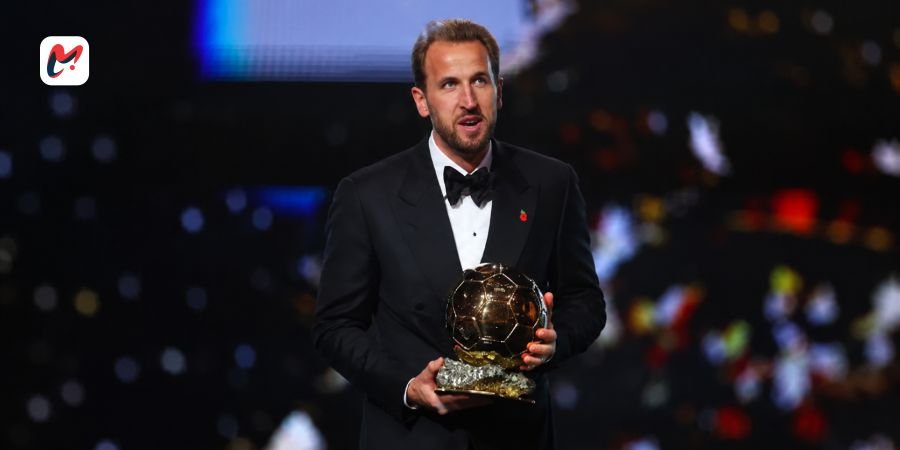
How Harry Kane Combines Precision, Patience, and Tactical Awareness to Shape Modern Attacking Football
Great forwards may be known by the goals that they score, yet their true worth lies much deeper. They impact the positioning of the defense, make plays for their team-mates, see things coming before their opponents do, and take split-second decisions in pressure situations. In this sense, Harry Kane’s game reflects his overall vision of the game, as both scorer and a player who understands how an attacking unit works.
Harry Kane’s evolution is a good example of what makes a great athlete: technique gains its value with the ability of the athlete to know when and how to apply it. Unlike many others, he does not rely on speed and physicality, instead choosing to develop himself as a forward based on positional play and anticipation.
The Art of Reading the Game
One of the qualities that defines Harry Kane well is his knack of being able to read opportunities even before they present themselves. Whereas a defender may be watching the ball, the striker will have noted the space that has opened up behind the defense. While a midfielder may be setting himself up to make a pass, the forward would have shifted position in anticipation of making progress towards the goal.
It all depends on the little things that one decides. Good positioning makes the defenders talk to each other and reposition themselves and watch out in different directions. Even if the forward does not get the ball, his positioning may give space to another player to go forward.
Such quality explains further why goalscorers require a lot more besides just the art of shooting. A forward needs to know how the game flows and react to how the goalkeeper will play to decide when to shoot and when to hold off.
More Than a Traditional Number Nine
Attacking football in modern times demands much from the central forwards. Coaches may want them to stay close to the penalty box, push back further to act as a link between midfield and attack, or even spread wide to create room for their advancing teammates. Having such qualities makes players valuable assets to their sides.
Playing beyond the usual scope of a penalty-box striker has its advantages as shown by Harry Kane. The ability to pass the ball from further out enables him to be a part of the team’s offensive game even when there aren’t any goals to be scored. Moving further down the pitch helps him distract the defenders and create gaps for his teammates.
There is, however, the necessity of discipline. It can be dangerous to move too far back leaving no one in the penalty box, or too far up the pitch to cut off the forward from the rest of the team. Correct positioning comes from knowing the plans of the teammates and whether the attack needs an additional passer or just a run.
Composure Under Pressure
A striker’s game relies to a considerable extent on the choices he makes in times of uncertainty. The ball can come in through a tricky pass, a defender can take away any opening, and the goalkeeper can come rushing out to cut the angle down. In these circumstances, technical preparation has to go hand-in-hand with emotional self-control.
Harry Kane has demonstrated how self-control can aid good finishing techniques. This player usually relies on balance, controlled ball contact, and an appropriate shooting angle rather than on complex moves. Taking penalties also requires a special kind of concentration since the player has to handle the pressure and make his choice.
Self-control is not about the absence of nervousness. It implies possessing sufficient self-control to perform your usual trick under the feeling of extraordinary importance of the outcome. Practice and experience are able to help you acquire this skill. No professional sportsperson, however, can avoid uncertainty at all times.
Leadership Through Preparation
Leadership on the pitch does not necessarily come from grandiose rhetoric or show of authority. It may arise from preparation, professionalism, communication, and readiness to take responsibility in case a game is tough.
In that regard, Harry Kane has the role of being a senior player for both the club and national team. His teammates are likely to expect leadership from him as well as other experienced players especially during tough times when self-confidence and coordination of effort matter. In such cases, it will be helpful to have a forward who is aware of his role tactically and can guide others as well.
This kind of leadership entails taking responsibility for actions too. A striker has some tough moments where scoring opportunities do not lead to goals. Successful players should be ready to deal with such moments by not letting their frustration affect their judgment.
Lessons for the Next Generation
There are a number of important lessons that young strikers can learn from this approach. First, movement needs to be studied as much as finishing. By knowing where to position yourself, when to make your run, and how to open space up for yourself, you can help your team without ever getting the ball.
Second, passing and receiving skills have to go hand-in-hand with developing shooting abilities. If a striker is able to hold on to the ball, to link up with midfield players, and to notice his colleagues who are in better positions, then he will be more difficult to forecast for the opponents.
Finally, patience plays an important role in this development process. Physical qualities can become an advantage at first, but decision-making skills take time to improve.
A Career Built on Adaptability
What continues to make Harry Kane so popular is a mixture of traits which make him fit for the top level of his sport. Goal-scoring is still his main forte, although he plays much more than that – a player who knows how to attack from different positions and take part in all of the attacking processes.
From the experience of Kane, we can learn what makes a player great at playing professional football. Talent can be a stepping stone to success, but preparation, flexibility, and good judgment of situations will allow you to keep going in the changing environment.
For those football players who look forward to developing their skills, the most important thing to remember is that they should try to understand the logic behind the movements of the experienced players, not repeat them. Good forwards know that everything they do affects the opponents, changes their game plan.
Read Also :- Hayden Panettiere: A Remarkable Journey of Talent, Resilience, and Artistic Expression