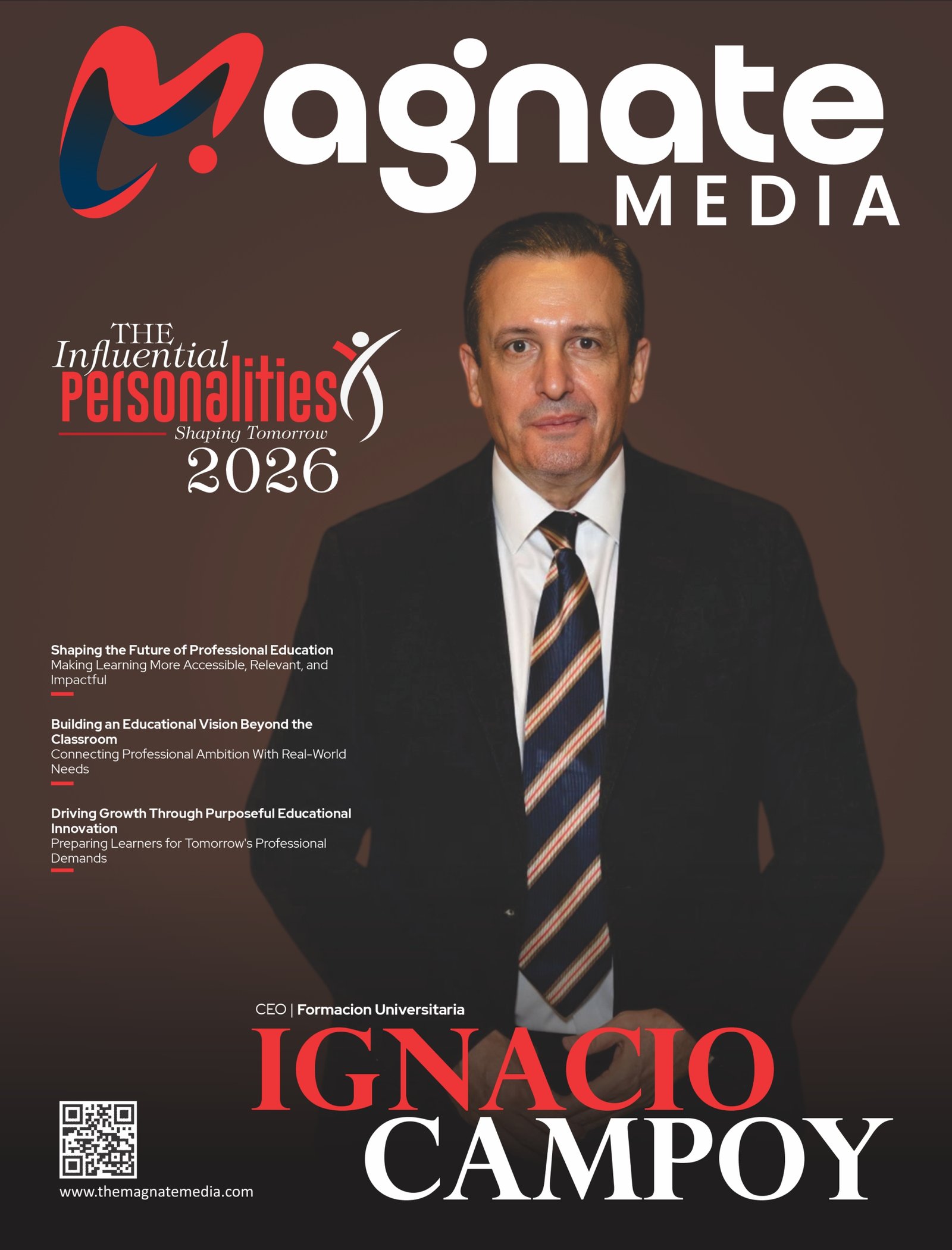
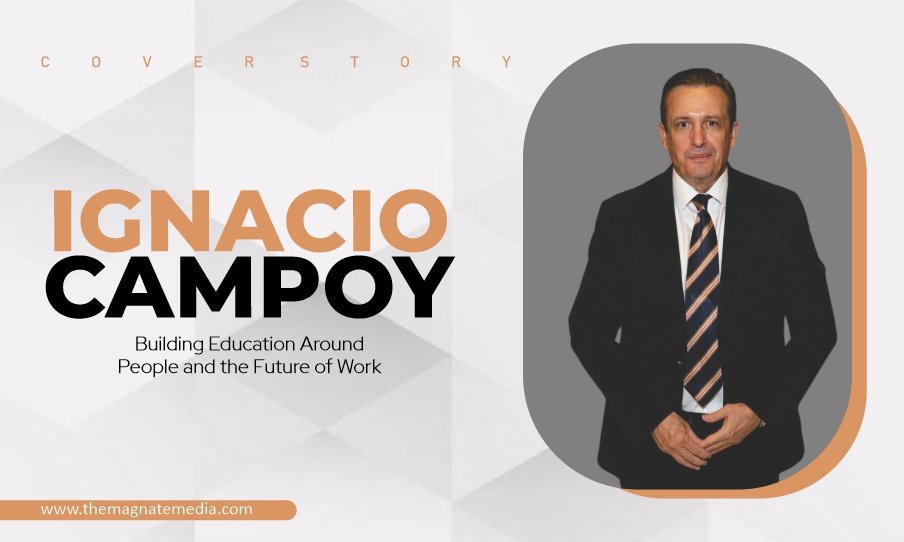
From championing flexible learning to connecting education with employability, Ignacio’s entrepreneurial journey reflects a belief that lasting business success comes from creating opportunities for people.
When Ignacio Campoy founded Formación Universitaria in 2001, his vision was rooted in a straightforward idea: education should be accessible to people who want to improve their professional lives, regardless of their personal circumstances. For many individuals, pursuing further education while balancing work, family responsibilities, and other commitments was not easy. He saw an opportunity to build an educational model that could accommodate these realities while helping people develop skills relevant to their careers.
That idea became the foundation of his entrepreneurial journey. Over time, his understanding of education expanded beyond delivering courses and academic knowledge. He came to see it as a way to improve employability, support career progression, and help professionals adapt to a labor market that continues to change.
This perspective has shaped the development of Formación Universitaria. Since its establishment, the institution has trained more than 300,000 students from approximately 90 countries. While these figures reflect its reach, Ignacio Campoy’s focus extends beyond growth alone. For him, the real challenge is ensuring that education remains relevant to learners, responsive to businesses, and capable of creating lasting value.
Recognizing an Opportunity Before It Became Mainstream
One of the defining decisions in Ignacio Campoy’s career was investing in online education and e-learning in 2001, when digital learning had yet to become an established approach. He recognized the potential of a model that could make education more flexible and accessible to people who could not easily follow traditional study arrangements.
The opportunity was not simply to deliver courses through a different medium. It was to reconsider how education could fit into people’s lives. Rather than expecting learners to adjust their work and personal commitments around their studies, the model sought to bring education closer to them.
Turning that idea into a sustainable business requires a clear understanding of the value being created. Ignacio Campoy believes an educational institution must serve three connected interests: its students, the organization itself, and society. Financial sustainability is necessary, but it should not come at the expense of educational quality or the needs of learners.
This balance continues to inform his approach to entrepreneurship. A business needs to sound commercial foundations to survive and grow, but its long-term relevance also depends on whether it addresses a genuine need. In education, that means offering learning opportunities that people can realistically access and use to advance their professional goals.
Rethinking the Purpose of Education
As Formación Universitaria developed, its purpose evolved from providing education to supporting professional and personal transformation. This change reflects a broader understanding of what learner’s need from an educational institution.
Acquiring knowledge is important, but it is only one part of professional development. People also need to apply what they learn, strengthen their capabilities, and respond to changing expectations in their fields. For some, education creates a route to employment. For others, it supports career progression, a transition into a different profession, or the opportunity to update skills developed over many years.
For Ignacio Campoy, educational institutions must therefore understand the labor market rather than operate independently. They need to consider the capabilities employers require, the challenges professionals face, and the skills that may become important as industries evolve.
Trust is important. Choosing an educational program involves an investment of time, money, and personal effort, often with the expectation of improving future opportunities. This places a responsibility on institutions to maintain academic standards, act ethically, and communicate honestly about what they offer.
His approach reflects the belief that education should not be reduced to commercial transactions. Its value ultimately depends on what learners gain from the experience and how effectively their learning supports their ambitions.
Leadership That Makes Room for Others
Building an organization over the long term has also influenced Ignacio Campoy’s understanding of leadership. One lesson has been the importance of moving beyond a business model that depends too heavily on one individual.
As an organization grows, its leader cannot remain involved in every decision. Progress depends on building capable teams, distributing responsibility, and allowing people to develop their own judgment. Ignacio Campoy believes that a good leader should bring together individuals with strong expertise in their respective areas rather than attempt to know everything personally.
This approach requires trust, but it also requires clarity. People need to understand their responsibilities, have opportunities to contribute, and recognize how their work supports the organization’s wider objectives. Delegation is not simply about transferring tasks; it is about developing the capacity of the organization to function effectively as it expands.
Continuous learning is another principle that shapes his leadership. Business practices, technology, and professional expectations change over time. What worked yesterday may not be effective tomorrow, and leaders must be willing to question established assumptions.
Ignacio Campoy also places importance on listening to customers. That does not mean agreeing with every request. It means understanding the need behind it and determining whether the organization can respond in a way that is both practical and valuable.
Innovation With a Clear Purpose
Technology is changing the way educational institutions design programs, support learners, and manage their operations. Ignacio Campoy approaches innovation with a practical principle: change should be introduced because it creates value, not simply because a new tool or trend has emerged.
Artificial intelligence is one of the technologies he believes will have a significant influence on education in the coming years. Its potential includes adapting learning materials to individual needs, identifying areas where students require additional support, and helping institutions develop more personalized learning experiences.
He also sees opportunities in data analytics, adaptive learning systems, and intelligent educational platforms. These technologies could help providers understand learner progress more effectively and strengthen the connection between education and employability.
However, Ignacio Campoy does not view artificial intelligence as a replacement for teachers or trainers. Its role, in his view, is to support learning and enable a more individualized approach while preserving the importance of human guidance.
The distinction matters because digital delivery alone does not guarantee better education. Technology must contribute to meaningful learning outcomes, and institutions must assess whether its use improves the experience for students.
Growth brings related responsibility. As an organization expands, its processes, quality controls, and internal culture must develop alongside it. Without these foundations, increased scales can place pressure on standards. Ignacio Campoy sees quality and growth as complementary when expansion is built on effective practices rather than pursued at their expense.
Adapting to a Changing World of Work
One of the lessons Ignacio Campoy draws from building an organization is that success cannot depend on repeating the same methods indefinitely. Learners’ expectations change; businesses face new requirements, and professional roles evolve as technology and markets develop.
For educational institutions, this creates an ongoing need to review programs, listen to learners, and understand the skills employers are seeking. Reskilling and upskilling are becoming increasingly important as professionals prepare new responsibilities or adapt to changes in their existing roles.
Ignacio Campoy believes lifelong learning will become an increasingly important part of working life. Education is no longer something people can assume they will complete during the early stages of their careers. Professionals may need to update their knowledge repeatedly, develop new technical capabilities, and strengthen their ability to work in changing environments.
This shift creates opportunities for institutions that can offer specialized, relevant training. At the same time, providers must ensure that their programs remain grounded in genuine learning needs rather than following every emerging trend.
International expansion is another area of opportunity for Formación Universitaria. Having trained students from approximately 90 countries, the institution has experience serving learners across different markets. Continued expansion will require attention to local expectations, professional requirements, and the ability to maintain consistent standards as the organization reaches new audiences.
Making Decisions Amid Uncertainty
Uncertainty is an unavoidable part of running a business. Leaders often need to make important decisions before all the information is available, balancing the need for careful analysis with the reality that waiting too long can carry its own risks.
Ignacio Campoy’s approach begins with separating facts from emotions and examining different possible outcomes. He also considers the long-term consequences of decisions rather than judging them solely by their immediate results.
Experience and intuition have a place in this process, but so does responsibility. Decisions affect employees, customers, and the future direction of an organization. Leaders must therefore be prepared to assess the available evidence, acknowledge uncertainty, and accept accountability for their choices.
Difficult periods have reinforced another important lesson: confidence should not come at the expense of honesty. A leader must be able to remain calm when problems arise, communicate realistically, and help the organization maintain direction without concealing challenges.
These experiences have also strengthened Ignacio Campoy’s belief in the importance of people. Strategies and systems can guide an organization, but the people who implement them determine much of its ability to respond, adapt, and improve.
Developing Talent Through Trust and Purpose
For Ignacio Campoy, developing talent begins with three essential elements: trust, responsibility, and opportunities for growth. Employees need the space to contribute their expertise, take ownership of their work, and continue developing professionally.
He believes leaders should surround themselves with people who bring strengths that complement their own. The objective is not to have one person provide every answer, but to create a team capable of combining different skills and perspectives to achieve shared goals.
Continuous professional development is particularly relevant within an educational organization. If an institution encourages students to keep learning, the same principle should apply to its employees and leadership. A learning culture requires an ongoing willingness to improve, reconsider existing practices, and respond to new demands.
Purpose is another important factor. People need to understand not only what they are expected to do, but also why their work matters. In education, that connection is visible in the opportunities created for learners and the professional goals they are working to achieve.
This understanding shapes Ignacio Campoy’s view of humanistic leadership. Authority alone does not develop people or build strong teams. Effective leadership involves creating an environment where individuals can strengthen their abilities, take on responsibility, and make meaningful contributions to the organization.
Measuring Impact Beyond the Balance Sheet
Financial performance remains essential to any business. Revenue, profitability, growth, and efficiency provide important information about an organization’s health and its ability to sustain operations.
However,Ignacio Campoy believes these measures do not tell the whole story of an educational institution. Student satisfaction, professional development, employability outcomes, and the value created for businesses and society also deserve attention.
An institution should consider whether its programs are helping people develop relevant capabilities and whether its activities are creating opportunities for individuals and organizations. Its contribution to employment, talent development, and professional advancement can provide a broader perspective on its performance.
Measuring these outcomes requires looking beyond commercial activity to consider the purpose behind it. Financial sustainability enables an organization to continue operating and investing in its future, while meaningful impact demonstrates the value it delivers to the people it serves.
For Ignacio Campoy, the two should reinforce each other. A responsible business must remain commercially viable while continuing to deliver on the commitments that make its work worthwhile.
Looking Ahead: Education, Technology, and Employability
Over the next five years, Ignacio Campoy sees considerable opportunities at the intersection of education, technology, and employment. Artificial intelligence is likely to support more personalized learning, while specialized training connected to emerging professions and digital capabilities will remain important as the workforce evolves.
For Formación Universitaria, the priorities are to continue growing, strengthen educational quality, pursue international expansion, and maintain a clear focus on employability. New technologies will form part of this journey, but their adoption must remain connected to the institution’s educational objectives.
The wider challenge is helping people adapt to a labor market that may change rapidly. This requires educational providers to remain attentive to new skill requirements and develop learning opportunities that respond to the realities professionals face.
Yet technological advancement does not remove the need for human understanding. More efficient systems can improve how an institution operates, but people remain central to the learning experience and the decisions that shape it.
For Ignacio Campoy, the next chapter is therefore not simply about making Formación Universitaria bigger. It is about making the institution more effective, more relevant, and better equipped to support learners and organizations as their needs evolve.
A Legacy Built on Opportunity
When Ignacio Campoy considers his legacy, awards, positions, and professional recognition are not his primary measures of success. What matters more is whether his work has helped people and organizations develop their potential.
In business, he wants to demonstrate that commercial success can coexist with social responsibility. In education, his ambition is to contribute to an approach that connects learning with people’s needs and the realities of the labor market.
His journey with Formación Universitaria reflects a continuing commitment to these principles. The institution’s development has been shaped by the belief that education should be accessible, flexible, and relevant to the professional challenges learners face.
Ultimately, Ignacio Campoy’s philosophy of leadership rests on a simple idea: helping people become better than they are today. It is a perspective that places people alongside performance and views business growth not only in terms of what an organization achieves, but also in the opportunities it creates for others.
For him, the lasting value of leadership lies in leaving the professional world a little better than he found it.