
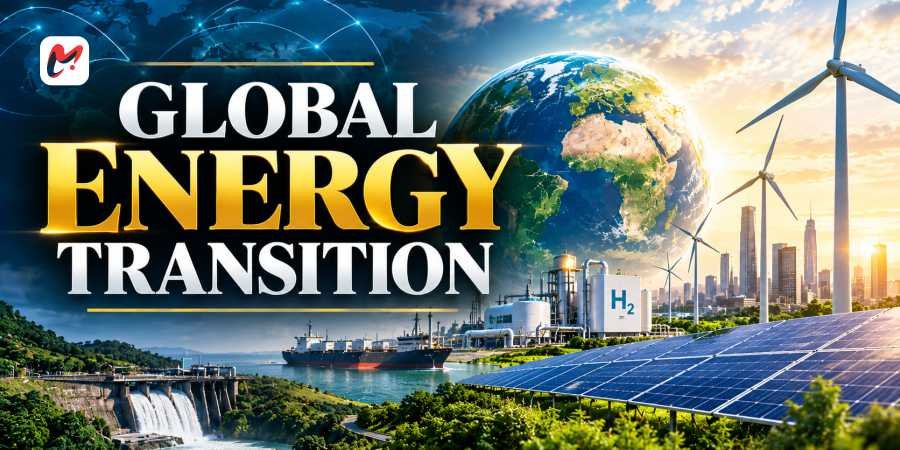
How the Global Energy Transition is Reshaping Energy Systems Through Innovation, Investment, and Clean Technology
Energy is no longer simply an input for factories, transportation, and households. It has become a strategic consideration influencing national competitiveness, industrial development, technological progress, and environmental responsibility. As economies expand and electricity demand changes, decision-makers must determine how to maintain dependable supplies without allowing energy production to place an unsustainable burden on the environment.
The Global Energy Transition reflects this wider challenge, bringing together new technologies, economic reforms, infrastructure investment, and changing expectations about how societies use natural resources.
The transformation is unfolding differently across regions. Industrial economies are reconsidering established power systems, developing markets are working to meet growing demand, and businesses are examining how energy costs affect their operations. There is no universal solution that fits every country. Progress depends on local resources, available capital, technical expertise, and the ability to coordinate decisions across entire energy networks.
What connects these efforts is the need to build systems capable of supporting prosperity over the long term. Achieving that objective requires governments, businesses, investors, and researchers to look beyond individual projects and consider how their decisions influence the wider economy.
Reimagining How the World Generates Electricity
The future electricity mix will depend on how effectively countries combine different energy resources. Solar installations can turn available sunlight into electricity, while wind farms harness moving air to generate power. Both technologies offer opportunities to expand electricity production without the direct combustion emissions associated with fossil-fuel generation.
Their contribution, however, depends on more than installing additional capacity. Electricity must reach consumers when they need it, even when weather conditions affect renewable output. This makes network planning, storage, demand management, and coordination between generating facilities increasingly important.
Some regions can draw on hydropower or geothermal resources, while others may require a broader combination of technologies to meet industrial and residential demand. Existing power stations, geographical conditions, environmental considerations, and the cost of connecting new projects all influence investment decisions.
The objective should not be to select a single preferred source for every situation. It should be to develop an appropriate combination of resources that provides dependable electricity, limits environmental damage, and remains affordable for consumers. A well-designed system can also reduce the risks associated with relying too heavily on one fuel, supplier, or generation technology.
Turning Scientific Progress into Practical Solutions
Research can open new possibilities for energy production, but its real value emerges when discoveries become dependable and commercially viable applications. Battery development, advanced materials, digital controls, and more efficient industrial equipment are creating opportunities to improve how energy is stored, distributed, and consumed.
The Global Energy Transition will also be influenced by technologies that address sectors where reducing emissions remains difficult. Certain industrial processes require intense heat, while aviation and shipping face technical constraints that make direct electrification challenging. Low-carbon hydrogen, sustainable fuels, carbon management technologies, and advanced nuclear systems may contribute in selected applications, depending on their performance, cost, and environmental implications.
Digital tools are changing operational decision-making as well. Utilities can use predictive models to anticipate demand, detect irregular equipment behaviour, and schedule maintenance before failures occur. Industrial operators can examine energy consumption in greater detail and identify where process changes could reduce waste.
These developments require careful evaluation. A technology may offer promising results in a laboratory but face different challenges when deployed across a large network. Decision-makers must examine lifecycle impacts, infrastructure requirements, operational safety, and total costs before treating an innovation as a practical solution.
Financing the Infrastructure of Tomorrow
New energy systems cannot develop without capital. Electricity networks, generation facilities, storage projects, and industrial upgrades require investment that often takes years to plan and deliver. Investors therefore need confidence that projects can operate under stable rules and recover their costs over an appropriate period.
Public policy plays a significant role in creating those conditions. Governments influence project development through permitting procedures, electricity market rules, infrastructure planning, research support, and environmental standards. Well-designed frameworks can encourage investment while maintaining safeguards for communities and consumers.
For countries with limited financial resources, the challenge is especially demanding. Expanding electricity access, meeting industrial demand, and modernizing infrastructure may compete for funding with healthcare, education, and other essential priorities. Affordable finance and access to technical expertise can help projects progress, but financing must reflect the economic realities of each market.
Private companies and financial institutions can contribute by assessing long-term opportunities, developing viable business models, and directing capital towards projects with credible operational plans. International partnerships can provide additional expertise and funding where domestic resources are insufficient.
Investment decisions should also account for future adaptability. Infrastructure designed around outdated assumptions may become expensive to maintain or difficult to integrate with new technologies. Planning for flexibility can help protect the value of assets as energy demand and technology continue to evolve.
Why Energy Security Matters to Economic Growth
An interruption to energy supplies can affect far more than electricity bills. Factories may reduce production, transport networks can experience delays, and essential services may face operational difficulties. Energy reliability therefore influences business confidence, employment, and the wider stability of national economies.
The Global Energy Transition creates opportunities to reduce some of these vulnerabilities by expanding domestic generation, improving efficiency, and broadening the range of available energy sources. Yet the shift also changes where dependencies arise. Manufacturers of batteries, solar equipment, and other energy technologies rely on specialized components, mineral supplies, shipping networks, and concentrated production capabilities.
Countries and businesses must understand these connections when developing their energy strategies. Diversifying suppliers, maintaining essential equipment, strengthening transmission infrastructure, and preparing for emergencies can reduce the consequences of disruption.
Companies can also improve their exposure to energy market volatility by monitoring consumption, upgrading inefficient machinery, and evaluating appropriate on-site generation or electricity procurement arrangements. The best approach depends on operating requirements, investment capacity, and the reliability of available alternatives.
Security and sustainability should therefore be considered together. An energy system is valuable only when it can deliver power consistently, withstand foreseeable disruptions, and support the activities that depend on it.
Ensuring Communities Share the Benefits
Changes in energy production affect people in different ways. Some communities may gain employment through new infrastructure and manufacturing, while others may face the closure of established industrial facilities or rising costs during periods of adjustment. Policymakers must recognize these differences when designing transition programmes.
Workers moving away from declining industries may require technical qualifications suited to new occupations. Training programmes work best when they reflect actual employer demand and provide realistic routes into employment. Regional development measures can also help communities attract new businesses rather than depend on a single industry.
Affordability deserves equal attention. Households with limited incomes may struggle to absorb higher energy costs or finance improvements that would reduce their consumption. Targeted support, efficient housing, and accessible financing can help ensure that modernization does not exclude the people who need reliable energy most.
The Global Energy Transition should also improve access to essential services. Appropriately planned energy projects can support medical facilities, schools, small enterprises, and remote settlements. However, their long-term value depends on maintenance, local skills, dependable equipment, and arrangements for covering operating costs.
A transition becomes more durable when communities understand its purpose, have a voice in decisions, and can see practical benefits. Social participation is not separate from energy planning; it helps determine whether new systems can succeed over time.
From Commitments to Lasting Results
Energy transformation is measured through implementation rather than announcements. Governments may establish ambitious targets, and businesses may publish sustainability commitments, but progress ultimately depends on completed projects, dependable infrastructure, improved efficiency, and demonstrable reductions in environmental impact.
The Global Energy Transition requires institutions to assess results honestly and revise strategies when evidence points to a better course. Policymakers need reliable information about demand, costs, emissions, and infrastructure performance. Companies need clear investment priorities and measurable operating objectives. Researchers need pathways to test and improve technologies under real-world conditions.
International cooperation can accelerate learning, particularly when countries share technical knowledge and lessons from projects that have succeeded or encountered difficulties. At the same time, local decision-makers must adapt these lessons to their own circumstances rather than assume that one country’s model will work everywhere.
The coming years will test the ability of societies to balance several priorities simultaneously: dependable power, economic opportunity, environmental protection, and fair access. These goals may create difficult trade-offs, but transparent evaluation and sound planning can help decision-makers navigate them.
The long-term promise of a transformed energy system lies in its ability to support human development while making economies less vulnerable to environmental and supply-related pressures. Achieving that outcome will require persistence, investment, and a willingness to reconsider established practices. With practical policies and accountable leadership, countries can build energy systems that serve present needs while leaving future generations with stronger infrastructure and more sustainable choices.