The Historic Return to Lunar Orbit With the NASA Artemis Rocket Launch
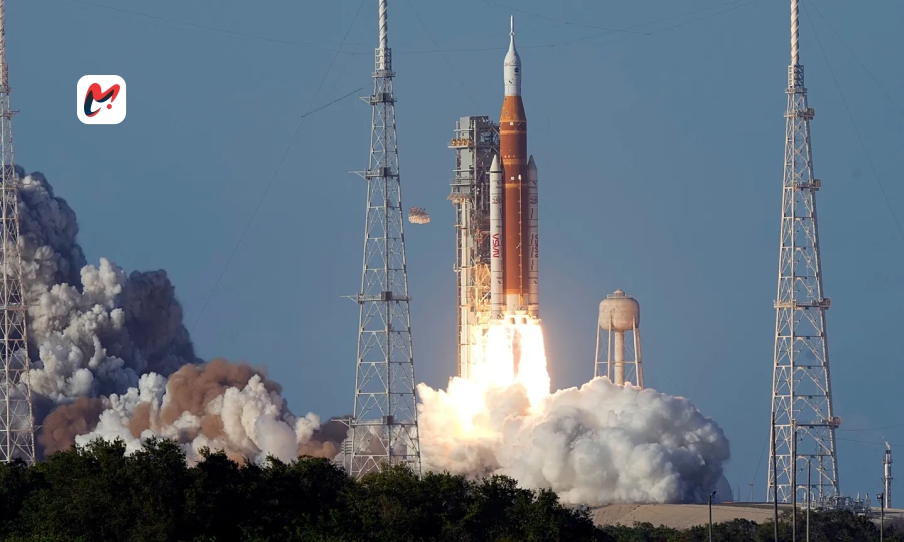
Out there, along the shore at Kennedy Space Center, quiet moments built up until a thunderous blast split the air and rattled windows across Florida. April 1, 2026 – eyes everywhere turned skyward when NASA’s Artemis rocket lifted off, carrying four determined astronauts bound for the Moon. Far more than routine travel, this marked the clear restart after fifty years of staying close to Earth. Inside the Orion module, a team from different nations began their ten-day mission, one shaped by extreme challenges meant to test today’s technology while paving paths beyond temporary visits to the lunar ground.
A New Era of Deep Space Engineering
What makes the NASA Artemis rocket launch work lies deep in the strength of the Space Launch System – an engine built beyond anything seen before. Towering like a pillar shaped by human drive, it pushed through Earth’s pull, lifting Orion into space for early tests. Instead of old-style flight paths, this trip follows a loop guided by natural forces. Clever timing places the capsule so the Moon tugs it around, then sends it home – all without firing big engines again. Safety leads every choice here, protecting astronauts while quietly recording how well air systems and shields handle harsh conditions.
The Crew Making History Beyond Earth
Within the cramped but high-tech confines of the Orion, the crew represents the diversity and unity of modern exploration. Following the nasa artemis rocket launch, Commander Reid Wiseman and his team began a series of manual piloting demonstrations. These maneuvers are essential for future missions that will require docking with lunar landers. Christina Koch has already made history as the first woman to venture into lunar space, while Jeremy Hansen carries the pride of Canada as the first non-American to reach these distances. Their mission is a “dress rehearsal,” a vital stepping stone that validates every sensor and switch before NASA attempts a physical landing later this decade.
Scientific Objectives and the Lunar Flyby
As of today, April 6, 2026, the spacecraft has officially entered the moon’s sphere of influence. The gravity of the lunar body is now the primary force acting on the vessel, pulling the astronauts closer to the gray, cratered surface than any human has been since 1972. During this flyby, the crew is tasked with capturing high-resolution imagery and conducting science experiments that were impossible during the uncrewed tests. The data retrieved after the nasa artemis rocket launch will help scientists identify the best locations for future lunar bases, particularly near the south pole where frozen water is believed to reside. This mission proves that our technology can handle the rigors of the deep-space environment.
Testing the Limits of Human Endurance
Every hour spent in the Orion capsule is a test of human and machine synergy. After the nasa artemis rocket launch, the astronauts have been monitoring the cabin’s atmosphere, ensuring that carbon dioxide scrubbing and temperature regulation remain stable in the harsh vacuum. They are also measuring radiation levels, which are significantly higher once a spacecraft leaves the protection of Earth’s magnetic field. By the time they splash down in the Pacific Ocean on April 10, they will have provided the most comprehensive dataset on human deep-space travel ever recorded. This mission is the bridge between the legacy of Apollo and the future of Mars exploration.
Looking Toward a Sustainable Lunar Future
The successful nasa artemis rocket launch is the second of many planned steps in a long-term strategy. While the current mission focuses on orbiting and testing, the next phase, Artemis III, is already in the early stages of preparation. The goal is no longer just to plant a flag and leave footprints, but to build a sustainable infrastructure including power grids and habitats. This vision of a “Lunar Economy” starts with these ten days in space. By proving that the SLS rocket and Orion can safely transport a crew to the moon and back, NASA has reopened the frontier for all of humanity.
Beyond the Horizon of the Moon
As the Orion spacecraft begins its journey back to our home planet, the impact of the nasa artemis rocket launch continues to ripple through the scientific community. We are no longer dreaming of the stars; we are actively navigating them. The lessons learned during this flight—from the performance of the heat shield during high-speed reentry to the psychological endurance of the crew—will form the foundation of every deep-space mission for the next fifty years. The moon is no longer a distant light in the sky; it is once again a destination, a laboratory, and a gateway to the rest of the solar system.