
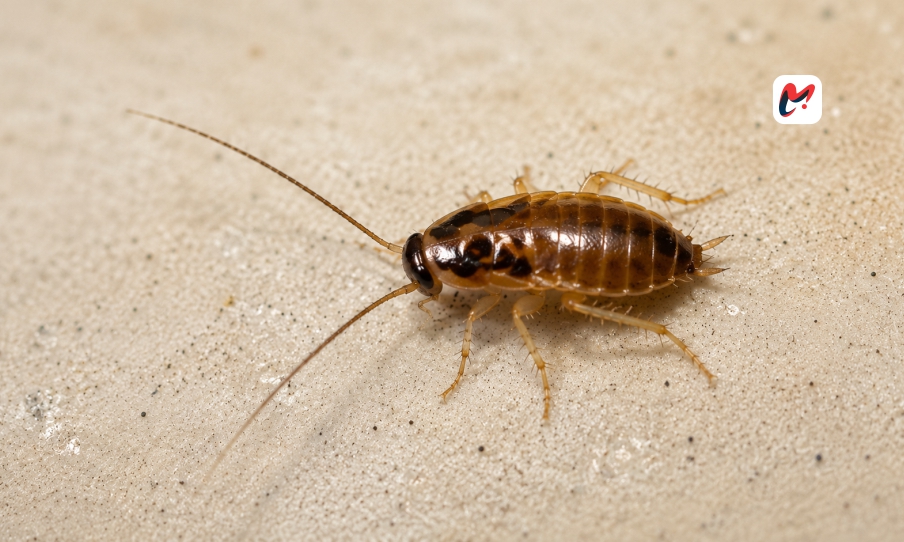
A sudden skitter near the sink – a speck of movement – can tighten your chest without warning. One lone crawler may look insignificant, yet it could whisper of deeper trouble nesting unseen behind walls. Spotting a juvenile roach shifts focus: the real issue isn’t just that one creature, but what conditions allowed it to appear. Called nymphs by experts, these hatchlings toughen quickly, mimic debris, and swell numbers overnight when ignored. Watch how they move, trace where they hide, respond before silence gives way to swarm. Your home reclaims balance only through sharp eyes and steady steps.
Hidden Tiny Dangers
Telling apart a juvenile bug proves way tougher than finding an grown-up one. Not much like the older ones, tiny roaches often get mislabeled. Out of their shielded egg packets – called oothecae – they hatch pale, nearly see-through. Hours pass, then their outer layer firms up, shifting shade to deep brown, light beige, or a red-tinged black based on type.
Little roaches don’t have grown wings – that’s the key thing to spot. Moving fast, they’re tiny, flattened ovals skimming along floors. Without wings, flight’s out of reach, yet tight cracks welcome their slim bodies where bigger bugs get stuck. Mistaken for beetles, crickets, even damp-area pests, these young invaders slip past notice. That confusion slows response, letting numbers build before anyone reacts.
Why a Single Nymph Signals Trouble
The sight of just one baby cockroach inside a home is almost never an isolated incident. These pests do not travel alone, and they do not wander into households purely by accident. A female insect can produce an egg capsule containing anywhere from sixteen to fifty embryos at a single time. Species like the notorious German cockroach will actually carry this egg case with them until it is right on the verge of hatching, ensuring a exceptionally high survival rate for the offspring.
Therefore, when you spot a baby cockroach crawling around, it serves as undeniable proof that an active breeding ground exists somewhere nearby. It means an adult female successfully nested, sustained herself, and produced a generation of young. Because these young pests comprise roughly seventy-five percent of an active colony, seeing one out in the open usually implies that the hidden nesting zones are becoming overcrowded, forcing the younger generation to venture out in search of new territory and sustenance.
Common Sanctuaries and Daily Diets
To effectively address the issue, you must understand exactly where a baby cockroach likes to hide and what keeps it alive. These microscopic foragers thrive in environments that provide three essential elements: high humidity, consistent warmth, and easy access to organic matter. Because of their tiny, compressible bodies, they spend their daylight hours crammed inside dark, tight spaces where humans rarely look.
The most common sanctuaries include the hollow spaces behind refrigerators, underneath kitchen sinks, inside the rubber gaskets of dishwashers, and within electronic appliances like microwaves and clocks. In bathrooms, they gather around leaking pipes, floor drains, and behind loose wall tiles. Their diet is incredibly opportunistic and unpicky. A baby cockroach can easily survive on microscopic food crumbs, grease splatters, paper cardboard, hair strands, fallen skin flakes, and even the starchy glue found on the back of wallpaper or book bindings.
Eradication Strategies for Long-Term Control
Eliminating a baby cockroach population requires a highly strategic approach that goes far beyond simply spraying the insects you can see. Traditional surface sprays often fail because they do not reach the deep, interior crevices where the young nymphs remain safely nestled. To truly disrupt their development and wipe out the colony, a combination of structural maintenance and targeted baiting must be deployed.
The first step involves a deep, thorough sanitation process to eliminate all potential food and water sources. Wiping down grease from stovetops, storing dry goods in airtight plastic containers, and drying out sinks before bed will immediately starve the pests. Next, strategic baiting is crucial. Utilizing specialized gel baits inside wall cracks and cabinet hinges is highly effective because a baby cockroach will consume the poison, return to the nest, and inadvertently transfer the toxin to the rest of the hidden colony.
Finally, sealing physical entry points with silicone caulk around baseboards, utility pipes, and window frames prevents external pests from entering. Incorporating insect growth regulators can also stall their development, ensuring that a young baby cockroach can never successfully molt into a reproductive adult, effectively halting the lifecycle of the infestation for good.