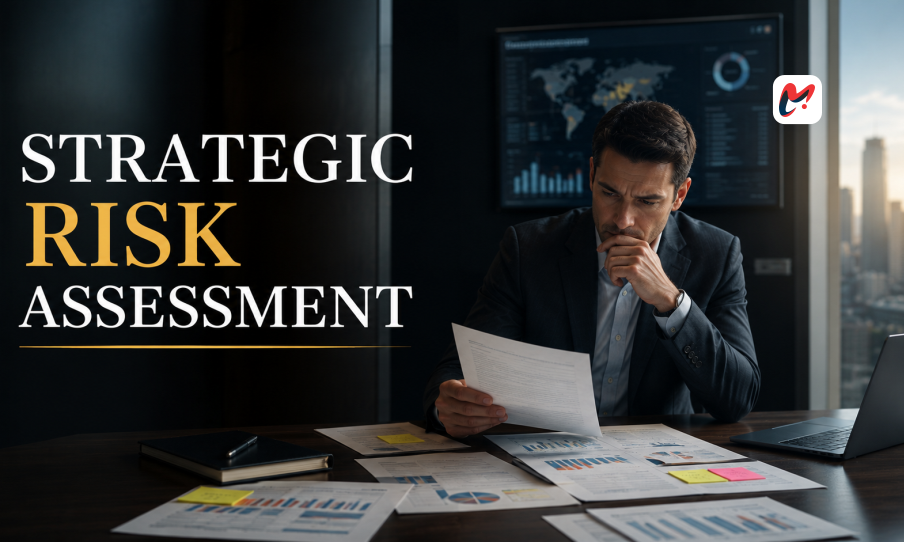
Out here, companies face markets reshaped fast – by tech leaps, sudden world changes. Staying alive means seeing past daily snags, zeroing in instead on dangers able to unravel whole ways of operating. Executives who scan ahead like this – spotting big unknowns early – are doing what’s called a strategic risk assessment. It helps weigh possible fallout, then act so future goals stay within reach. Work it into regular planning, and weak spots start looking less like traps, more like openings. When leadership gets how this wide-angle review works, staying tough through turmoil becomes normal – even when money tides shift without warning.
Rethinking Corporate Foresight Without Just Following Rules
Some leadership groups mix up regular checkups with deep strategic risk reviews. Not just about rules inside the company, real risks live outside its walls. Financial checks matter, yes, yet they miss big dangers like policy upheavals or global tensions. Sudden tech breakthroughs can wipe out old business models overnight. Looking ahead means asking what could make today’s strengths meaningless tomorrow. Outside pressures – market changes, bold rivals, customer turns – need constant scanning. A structured approach keeps leaders aware before cracks appear in performance.
Pausing to look ahead changes how groups handle uncertainty. Leadership stops reacting when they build space to study what might come next. By testing plans under different possible conditions, some organizations pull ahead while others stay stuck just getting by. Looking at money choices, hiring paths, and tech bets through a future lens keeps direction clear. Thinking beyond rules opens doors – shifting focus toward anticipation becomes the real win when planning includes deep risk reflection.
Integrating Enterprise Risk Management with Long-Term Growth
For maximum impact, a strategic risk assessment must not exist in an isolated corporate silo. It needs to be deeply woven into the annual strategic planning and budgeting processes. When a leadership team designs a five-year growth plan, executing a strategic risk assessment concurrently ensures that every aggressive growth target is balanced by an understanding of corresponding vulnerabilities. If an organization pursues expansion into a volatile international market without a dedicated strategic risk assessment, it risks exposing its capital to unmitigated political and currency fluctuations. Integrating a strategic risk assessment directly into executive decision-making creates a healthy culture of risk awareness throughout the management ranks.
Furthermore, a well-executed strategic risk assessment bridges the gap between top-level executives and the board of directors. Board members require clear visibility into the macro threats facing the enterprise to fulfill their fiduciary duties effectively. Presenting a detailed strategic risk assessment to the board provides them with the precise data needed to validate executive decisions and approve major capital expenditures. This collaborative clarity turns risk management into a powerful tool for strategic agility rather than a bureaucratic hurdle. By making the strategic risk assessment a permanent fixture of corporate governance, businesses can pivot smoothly when market conditions change.
Cultivating an Adaptable and Risk-Aware Organizational Culture
The ultimate success of any risk framework depends heavily on the human element within the organization. Even the most sophisticated strategic risk assessment will fail if the corporate culture penalizes employees for speaking up about potential vulnerabilities. True organizational resilience requires an open environment where managers feel empowered to report emerging threats identified during the strategic risk assessment process. When teams across different departments communicate openly about market shifts, the insights gathered from a strategic risk assessment become far more accurate and actionable. This democratization of foresight prevents cognitive biases and executive blind spots from derailing corporate performance.
As businesses look toward an increasingly complex future, the ability to anticipate disruption becomes a definitive competitive advantage. Organizations must view a strategic risk assessment not as a static, one-time annual project, but as a continuous, evolving discipline. Regularly updating the strategic risk assessment allows a company to remain nimble, adjusting its defenses and offensive maneuvers in real time. In a world where change is the only constant, embedding a rigorous strategic risk assessment into the organizational DNA is the most reliable way to secure sustainable, long-term success.