
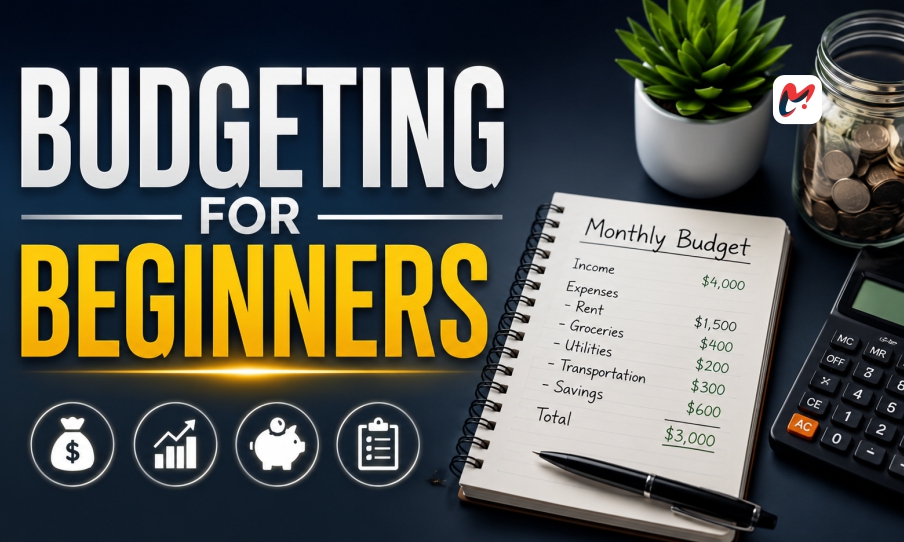
Taking charge of your personal finances can often feel like a daunting prospect, as you sift through pages of incomprehensible financial speak and aggressive stock market pitches. Yet, in truth, the principles of budgeting for beginners are simple, straight forward, and accessible to all. After all, any successful financial plan boils down to prioritizing your own financial needs and wants, and exercising conscious control over your income. It is vital to take the time to educate yourself and develop healthy financial habits, instead of rushing headfirst into a chaotic sea of financial planning gimmicks. Armed with the right knowledge, you will find that money management becomes a rewarding experience that greatly eases your path to financial independence and stability.
The Foundations of Personal Finance Management
Before embarking on your journey to financial mastery, it is crucial to have an honest assessment of your financial situation and set realistic goals for yourself. Budgeting for beginners often starts with getting to grips with the basics, including your income and expenses. It is of paramount importance to be realistic when planning your spending, as the failure to account for all expenses often leads to panic when a particularly large bill comes due. To illustrate, when compiling your monthly spending list, you must take into account all of your regular expenses, including electricity and water bills, credit card payments, subscriptions, and any other regular expenses. You should also calculate your income, factoring in your net profit, or the amount of any salary actually paid to you. Finally, you need to separate your regular expenses from variable expenses, an important part of the budgeting process for beginners. Understanding what you spend your money on is essential to developing cost-saving and money-making habits and optimizing your financial potential.
Setting Realistic Financial Goals for Long Term Success
A financial spending plan without a clear purpose rarely survives over the long haul, because sheer willpower alone is seldom enough to resist daily spending temptations. To ensure your financial plan remains sustainable, connect your spending limits directly to meaningful personal goals that inspire you to stay on track. Whether you are working toward paying off high-interest credit card debt, constructing a durable emergency savings fund, preparing for a home purchase, or planning a well-deserved vacation, having explicit objectives gives every single dollar a clear purpose. When practicing budgeting for beginners, it is crucial to start with small, highly achievable milestones rather than setting overly ambitious targets that leave no room for leisure or unexpected events. For instance, aiming to accumulate a modest emergency buffer of five hundred dollars can provide an immediate psychological safety net and boost your confidence. As you achieve these early victories, your connection with money will shift from anxiety to empowerment, proving that structured planning is really about creating true freedom.
Choosing a Simple Method That Fits Your Lifestyle
There is no single universal formula for managing personal finances, which means the best system is simply the one you can stick with consistently over time. When exploring budgeting for beginners, you will encounter several popular operational frameworks, including the fifty-thirty-twenty rule, envelope budgeting systems, and zero-based allocation planning. The fifty-thirty-twenty framework is particularly popular among newcomers because it categorizes your net income into straightforward buckets: fifty percent for essential obligations, thirty percent for discretionary desires, and twenty percent for savings or debt reduction. Alternatively, zero-based planning requires you to assign every single earned dollar a specific destination until your total income minus expenses equals zero. Whichever strategy you choose, ensure that it seamlessly fits your daily routines, personal temperament, and technological comfort level. The primary goal of budgeting for beginners is to establish a comfortable, repeatable routine, so avoid overly rigid or complex systems that feel tedious, as simplicity is always the ultimate key to lasting consistency.
Staying Consistent and Adjusting Your Plan Over Time
Creating your initial plan is only the first step in an ongoing, evolving relationship with your personal finances. Life is dynamic, and your financial strategy must remain flexible enough to adapt to changing circumstances, such as career changes, fluctuating living costs, or shifting personal priorities. Regular check-ins are vital when mastering budgeting for beginners, so dedicate fifteen minutes each week or month to review your transaction history, evaluate your spending habits, and celebrate your progress. During these routine reviews, acknowledge your positive choices, forgive occasional overspending without self-criticism, and make necessary recalibrations to keep your categories realistic. Remind yourself that minor mistakes and unexpected expenses are natural components of the learning curve rather than signs of failure. By maintaining an adaptable mindset and routinely refining your approach, budgeting for beginners transforms from a novel experiment into an automatic, deeply rewarding lifestyle habit that supports your lifelong aspirations.
Taking full command of your financial life is one of the most transformative commitments you can ever make for your future self. By focusing on basic fundamentals, defining clear personal objectives, adopting a flexible tracking system, and remaining patient through inevitable adjustments, you construct a resilient framework for lasting financial health. You do not need flawless precision to witness meaningful progress—you only need sustained consistency and a willingness to learn along the way. Embrace the empowering journey of budgeting for beginners today, and enjoy the peace of mind, freedom, and security that naturally accompany knowing your money is actively working toward your dreams.