
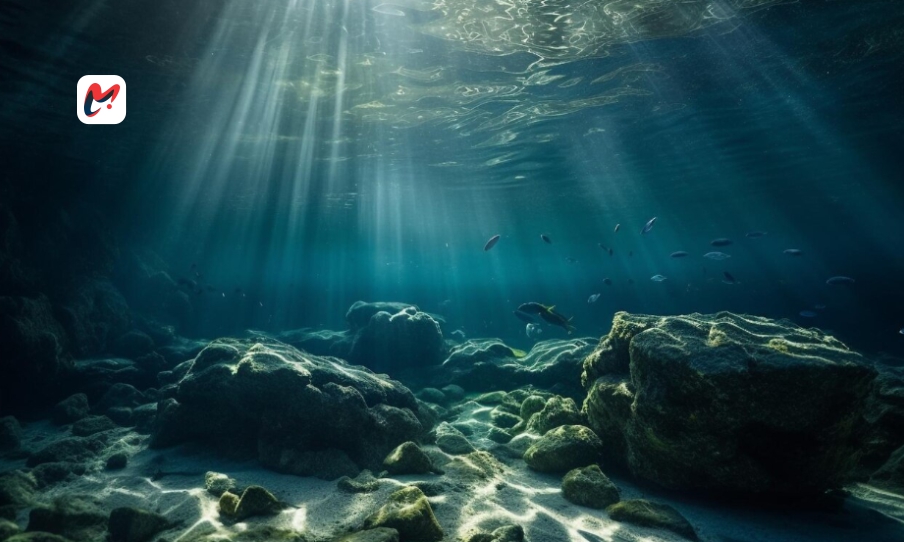
Down where sunlight fades, odd shapes drift through silent black water. These beings live far beneath waves – where few have ever looked. Pressure there crushes ordinary things. Darkness stays constant, never broken by dawn. Cold seeps into every corner, relentless, unchanging. Still, movement pulses in the void – slow, quiet, persistent. Eyes adapt oddly, stretching wide to catch faint glimmers. Some wear lights like signals; others dangle them low to lure close whatever stirs nearby. Bodies twist in unusual designs – jaws too large, limbs thin as thread. They eat when luck comes near. Heat vents feed entire clusters clinging tight to rock. Life finds a way – not easily, not gently – but fully present. Scientists record each glimpse without full understanding. Every dive risks much just to see what hides down there.
Life in Extreme Conditions
Darkness rules where sunlight fails to reach. Far below, life pushes through without help from above. Creatures down there find strange paths just to stay alive. Some grow lights inside themselves, turning night into something visible. That glow pulls others close, sends signals, sometimes fools what’s hunting them.
Deep down, pressure becomes a serious hurdle. Water pushes with crushing strength far below – hundreds of times more intense than up top. Yet some animals thrive there anyway, shaped by time into bendable forms with special cell designs. Their survival comes not from luck but slow change over ages. Life holds on where you’d least expect it.
Ice-cold water fills most of the deep sea, though spots near underwater volcanoes burn like stoves. Life finds a way even there, living off minerals instead of sunbeams through chemical magic called chemosynthesis. While light rules nearly every other ecosystem, down here it means nothing at all. Some creatures actually prefer extremes – freezing darkness one moment, scalding cracks the next.
Unique Features and Strange Appearances
One of the most striking aspects of any deep sea creature is its appearance. These animals often look unlike anything found on land or in shallow waters. From transparent bodies to oversized jaws and glowing eyes, their physical traits are both bizarre and functional.
For example, some species have enormous mouths filled with sharp teeth, allowing them to capture whatever prey comes their way in a food-scarce environment. Others have elongated bodies or gelatinous forms that require less energy to maintain. The lack of light has also led many creatures to develop heightened senses, relying on vibrations or chemical signals instead of vision.
Camouflage takes on a different meaning in the deep sea. Instead of blending into surroundings, some organisms use light to hide themselves, matching the faint glow from above. This advanced adaptation helps a deep sea creature avoid detection in a place where survival depends on remaining unseen.
The Role of Deep-Sea Ecosystems
Deep-sea ecosystems are more interconnected than they might appear. Every deep sea creature plays a role in maintaining the balance of this hidden world. From scavengers that feed on fallen organic matter to predators that regulate populations, each species contributes to the overall health of the ecosystem.
Marine snow, a constant shower of organic debris from the upper layers of the ocean, serves as a primary food source for many organisms. This slow but steady supply supports entire communities. Larger creatures often depend on smaller ones, creating a delicate food chain that sustains life in the depths.
Hydrothermal vent communities are particularly fascinating. Here, life is built around chemical energy rather than sunlight. Bacteria form the base of the food chain, supporting a range of unique organisms. These ecosystems demonstrate how a deep sea creature can thrive independently of the sun, challenging traditional ideas about life on Earth.
Exploration and the Future of Discovery
Despite advancements in technology, much of the deep ocean remains unexplored. Scientists estimate that a significant portion of marine species has yet to be discovered. Each expedition into the depths reveals new forms of life, expanding our understanding of biodiversity and evolution.
Modern tools such as remotely operated vehicles and deep-sea submersibles have made it possible to study these environments more closely. These technologies allow researchers to observe a deep sea creature in its natural habitat without disturbing its ecosystem. As exploration continues, new discoveries are likely to reshape our knowledge of life beneath the waves.
There is also growing interest in the potential applications of deep-sea research. From medical breakthroughs to insights into climate change, the study of these organisms holds immense promise. Protecting these fragile ecosystems has become increasingly important, as human activities begin to impact even the most remote parts of the ocean.
A World Still Waiting to Be Understood
The deep ocean remains one of the last frontiers on Earth, filled with wonder and unanswered questions. Every deep sea creature discovered adds a new piece to the puzzle of life’s complexity. As curiosity drives further exploration, this hidden world continues to reveal secrets that challenge our imagination and expand our understanding of what is possible in nature.