What the First Half of the 2026 Formula 1 Season Teaches Us About Life
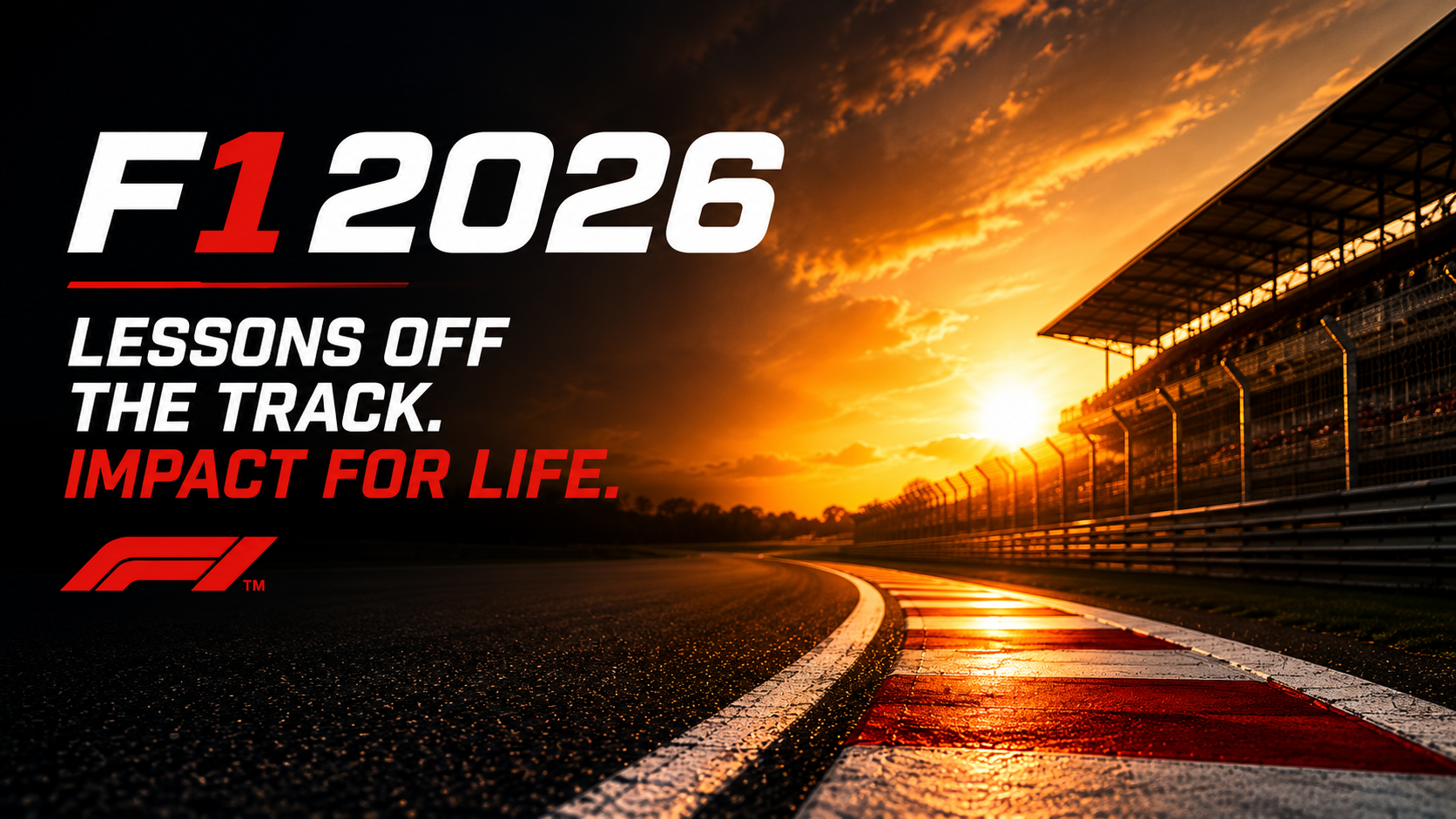
Every Formula 1 season tells a different story. Some are remembered for dominant champions, others for dramatic rivalries or revolutionary engineering. The first half of the 2026 Formula 1 season, however, has been defined by something far more relatable: uncertainty. New regulations reshaped the competitive order, familiar teams found themselves searching for answers, young drivers stepped into immense pressure, and races were won as much through strategy and adaptability as outright pace. For motorsport enthusiasts, it has been an enthralling championship. For everyone else, it has offered something equally valuable, a collection of life lessons from Formula 1 that extend far beyond the boundaries of a racetrack.
That may seem like an ambitious claim for a sport centered on cars traveling at more than 300 km/h. Yet Formula 1 has never been solely about speed. It is a contest of preparation, decision-making, resilience, leadership, and teamwork, played out under extraordinary pressure. Every Grand Prix represents months of planning, thousands of engineering decisions, and countless hours of collaboration before a driver even reaches the starting grid. Strip away the carbon fiber, telemetry screens, and roaring engines, and what remains is a remarkably accurate reflection of how success is built in everyday life.
The opening half of the 2026 championship has reinforced a truth that every successful individual eventually discovers: talent alone is rarely enough. Careers are not defined by moments of brilliance but by consistency. Businesses do not thrive because they avoid every mistake, but because they learn faster than their competitors. Leaders are remembered not because circumstances were always favorable, but because they remained composed when circumstances became unpredictable. In many ways, the first half of this F1 season has become a masterclass in navigating uncertainty, and that is precisely why its lessons deserve attention beyond the paddock.
Consistency is the Foundation of Every Championship
Perhaps the most significant life lesson emerging from the first half of the season is that championships are rarely won through spectacular weekends alone. While individual victories generate headlines and dominate social media conversations, title campaigns are built on something much less glamorous: consistently collecting points across circuits that demand entirely different strengths. Drivers who remain firmly in contention are not necessarily those who have produced the most eye-catching performances; rather, they are those who have managed difficult weekends intelligently, extracted the maximum from imperfect situations, and avoided turning minor setbacks into major disasters.
This distinction is easy to overlook because modern culture celebrates extraordinary achievements. We applaud record-breaking performances, billion-dollar companies, and overnight success stories while paying far less attention to the years of disciplined effort that made them possible. Yet Formula 1 demonstrates every season that consistency remains the sport’s most valuable currency. A single victory cannot compensate for repeated retirements, strategic errors, or inconsistent finishes. Teams understand that every point matters because remarkably small margins often decide championships.
The same principle governs our own ambitions. Whether someone is building a business, pursuing higher education, leading an organization, or simply trying to improve their personal life, progress is rarely driven by isolated moments of excellence. It is shaped by the habits repeated every day, even when recognition is absent. Reading twenty pages daily may not feel transformative, just as finishing fifth instead of retiring may not dominate the headlines on a Sunday afternoon. Over the course of a year, however, both decisions create an enormous competitive advantage.
Among all the life lessons that F1 continues to offer, this may be the most enduring. Success belongs less to those capable of extraordinary moments than to those capable of delivering dependable performance over an extended period.
Adaptability Has Become the Most Valuable Skill in Modern Competition
The introduction of Formula 1’s 2026 regulations represented one of the most significant technical shifts in recent memory. Every team entered the season armed with simulations, wind tunnel data, and enormous confidence in its engineering philosophy. Yet as soon as competitive racing began, reality challenged many of those assumptions. Some organizations interpreted the regulations more effectively than others, while several found themselves introducing rapid upgrades in an effort to close an unexpected performance gap.
What became apparent during the opening races was that technical excellence alone was insufficient. The teams that progressed most quickly were those willing to learn, experiment, and revise their understanding rather than stubbornly defending their original concepts. In elite sport, adaptability frequently proves more valuable than certainty.
Outside Formula 1, the pace of change has become equally relentless. Artificial intelligence is transforming industries, digital technologies continue reshaping customer expectations, and professions that appeared secure only a decade ago are evolving at a remarkable speed. In such an environment, experience certainly retains value, but experience without adaptability can quickly become a limitation. Organizations that cling too tightly to yesterday’s methods often find themselves overtaken by competitors willing to question assumptions and embrace innovation.
The opening half of the 2026 F1 season illustrates this perfectly. No amount of historical success guaranteed immediate competitiveness under a new set of regulations. Reputation earned respect, but adaptability determined results.
This is one of the most relevant life lessons of our time. The future rarely rewards those who resist change. Instead, it favors individuals and organizations capable of learning continuously, adjusting thoughtfully, and viewing uncertainty not as a threat but as an opportunity to improve.
Small Decisions Usually Determine Big Outcomes
Casual viewers often assume that Formula 1 races are won by the fastest driver or the quickest car. Those who follow the sport closely understand a more nuanced reality. Championships are frequently shaped by decisions so small that they escape immediate attention: choosing the correct tyre compound, reacting to changing weather one lap earlier than competitors, executing a flawless pit stop, or resisting the temptation to overtake in an unfavorable corner. None of these choices appears dramatic in isolation, yet together they often determine whether a driver stands on the podium or leaves empty-handed.
The first half of the 2026 season has repeatedly demonstrated how narrow the margin between success and disappointment has become. Competitive performance no longer depends solely on outright pace. Strategy, communication, preparation, and execution now influence results just as significantly. A fraction of a second lost in the pit lane or an unnecessary risk during an overtaking attempt can erase an entire weekend’s hard work.
These moments carry an important message beyond motorsport. We often imagine that life changes because of one defining decision: accepting a new job, launching a company, moving to another country, or making a major investment. While such milestones undoubtedly matter, our long-term trajectory is usually shaped by much smaller choices repeated consistently over time. Showing up prepared for meetings, responding thoughtfully instead of emotionally, maintaining physical health, investing in learning, or dedicating time to meaningful relationships may not seem extraordinary on any given day. Yet, much like the strategic decisions that define F1, their cumulative effect becomes impossible to ignore.
Perhaps that is why Formula 1 resonates with so many people who have never attended a Grand Prix. Beneath its technological sophistication lies a simple reminder that excellence is rarely accidental. It is created through hundreds of disciplined decisions, each seemingly insignificant on its own, but together powerful enough to shape careers, organizations, and lives.
No Champion Ever Wins Alone
One of the most enduring misconceptions about Formula 1 is that it is an individual sport. Television broadcasts naturally focus on the twenty drivers who occupy the grid, celebrate the race winners, and stand atop the podium. Still, anyone familiar with the inner workings of the sport understands that every victory represents the culmination of an extraordinary collective effort. Behind each driver stands an organization comprising hundreds of specialists, each responsible for a small but vital piece of a much larger puzzle.
An engineer may spend months refining an aerodynamic component that improves lap time by only a fraction of a second. Strategists evaluate thousands of race simulations before selecting the optimal tyre strategy. Mechanics rehearse pit stops repeatedly until every movement becomes instinctive. Software engineers process enormous volumes of telemetry to identify performance gains that remain invisible to the naked eye. Nutritionists, physiotherapists, logistics teams, data analysts, and communications professionals all contribute in ways that rarely make headlines, yet without them, even the most gifted driver would struggle to compete.
The first half of the 2026 Formula 1 season has illustrated this reality repeatedly. Several races have been decided not because one driver possessed greater talent, but because an entire team executed under pressure with remarkable precision. A perfectly timed pit stop, a bold strategic call, or an overnight engineering adjustment has often made the difference between victory and disappointment. These moments remind us that sustainable success is rarely an individual achievement. It is the product of people working toward a shared objective while trusting one another’s expertise.
This may be one of the most overlooked life lessons from F1. Modern success, whether in business, healthcare, education, or entrepreneurship, has become increasingly collaborative. Exceptional leaders understand that surrounding themselves with capable people is not a sign of weakness but a competitive advantage. The strongest organizations are rarely built around one extraordinary individual; they are built around teams whose collective capability exceeds the sum of their individual talents. Recognizing, valuing, and empowering others is therefore not merely good leadership. It is a prerequisite for long-term excellence.
Pressure Does Not Create Character. It Reveals It.
Formula 1 is perhaps the purest demonstration of performance under pressure. Every race weekend demands hundreds of split-second decisions, and each carries significant consequences. Drivers commit to overtaking manoeuvres at extraordinary speeds with only fractions of a second to judge distance, grip, and risk. Team principals make strategic decisions without knowing how weather, tyre degradation, or safety cars may alter the race minutes later. Engineers analyze vast streams of live data while knowing that a single miscalculation could undo months of preparation.
The first half of the 2026 championship has offered numerous examples of how elite performers respond when expectations collide with uncertainty. Some drivers have recovered brilliantly from difficult qualifying sessions to salvage valuable championship points. Others have demonstrated remarkable composure while defending against relentless pressure from faster competitors. Equally, there have been moments when impatience or poor judgment transformed promising race weekends into costly disappointments. Such contrasts remind us that pressure does not fundamentally change people; rather, it exposes the quality of their preparation, discipline, and decision-making.
These situations mirror challenges encountered far beyond motorsport. Executives negotiating major acquisitions, surgeons performing complex procedures, entrepreneurs presenting to investors, or students sitting critical examinations all experience moments where preparation must translate into execution. During such moments, confidence alone is insufficient. What truly matters is the ability to remain calm, trust one’s preparation, and make rational decisions despite emotional intensity.
Among the many life lessons demonstrated throughout this Formula 1 season, perhaps none is more relevant than this: pressure is inevitable, but panic is optional. Individuals who consistently perform at the highest level are rarely those who experience the least pressure. They are those who have developed the discipline to think clearly, while others lose composure.
Progress Belongs to Those Who Never Stop Improving
One of the defining characteristics of F1 is that no team, regardless of its position in the championship, ever considers its work complete. Even after securing victories, engineers immediately begin analyzing telemetry, identifying weaknesses, and developing upgrades for the next race. Every Grand Prix serves not only as a competition but also as a learning opportunity. Winning provides satisfaction, but it never eliminates the pursuit of improvement.
The opening half of the 2026 Formula 1 season has reinforced this philosophy. Teams that began the year competitively have continued introducing aerodynamic refinements, suspension upgrades, and software improvements because they understand an uncomfortable truth: standing still in Formula 1 is effectively moving backward. Rivals are constantly innovating, learning, and searching for marginal gains, making continuous development essential rather than optional.
The relevance of this mindset extends well beyond motorsport. Many professionals view success as a destination, believing that achieving a promotion, launching a successful business, or reaching a financial milestone marks the completion of their journey. In reality, sustained excellence demands perpetual learning. Markets evolve, technologies advance, customer expectations change, and new competitors emerge. Remaining relevant requires curiosity, humility, and a willingness to challenge one’s own assumptions long after initial success has been achieved.
This represents one of the most enduring life lessons from Formula 1. Growth is not an event but a habit. Those who embrace lifelong learning consistently place themselves in stronger positions to navigate change than those who rely solely on past achievements. The pursuit of improvement is not a response to failure; it is the discipline that prevents success from becoming temporary.
The Greatest Race We Run Is Not on the Circuit
As the 2026 championship prepares for its second half, the battles for victories, podiums, and ultimately the World Championship remain far from settled. New upgrades will alter the competitive order, strategies will evolve, and unexpected moments will undoubtedly shape the remainder of the season. Yet regardless of who eventually lifts the trophies, the first half of the campaign has already delivered something far more enduring than sporting entertainment.
It has reminded us that the principles governing Formula 1 are remarkably similar to those that shape successful lives. Consistency often outweighs occasional brilliance. Adaptability has become one of the defining characteristics of long-term success. Small decisions, repeated daily, ultimately determine significant outcomes. Teamwork remains indispensable even in environments that appear to celebrate individual achievement, while preparation and continuous improvement create the confidence required to perform under pressure.
These are not abstract motivational ideas. They are realities demonstrated every race weekend by the world’s most demanding motorsport. Every Grand Prix reinforces the importance of resilience after setbacks, discipline during uncertainty, and the relentless pursuit of marginal gains. In that sense, F1 becomes more than a championship fought across legendary circuits. It becomes a reflection of the challenges, ambitions, and aspirations experienced by people in every profession and at every stage of life.
Perhaps that explains why Formula 1 continues to attract audiences far beyond traditional motorsport enthusiasts. People are not simply watching extraordinary machines compete. They are witnessing determination confronting adversity, preparation meeting opportunity, and individuals striving for excellence despite relentless pressure. Those narratives resonate because they are deeply human.
The first half of the 2026 season, therefore, offers more than memorable races or fascinating championship statistics. It offers enduring life lessons that remain relevant long after the checkered flag has fallen. Whether we are leading organizations, building careers, pursuing personal ambitions, or navigating periods of uncertainty, the same principles continue to apply. Success rarely belongs to the individual who begins with the greatest advantage. More often, it belongs to the one who learns continuously, adapts intelligently, works collaboratively, and refuses to stop moving forward.
In the end, that may be the greatest lesson Formula 1 has to offer. Every lap presents a new opportunity to improve, every setback creates an opportunity to learn, and every season reminds us that the finish line is never the end of the journey. It is simply the point from which the next challenge begins.