
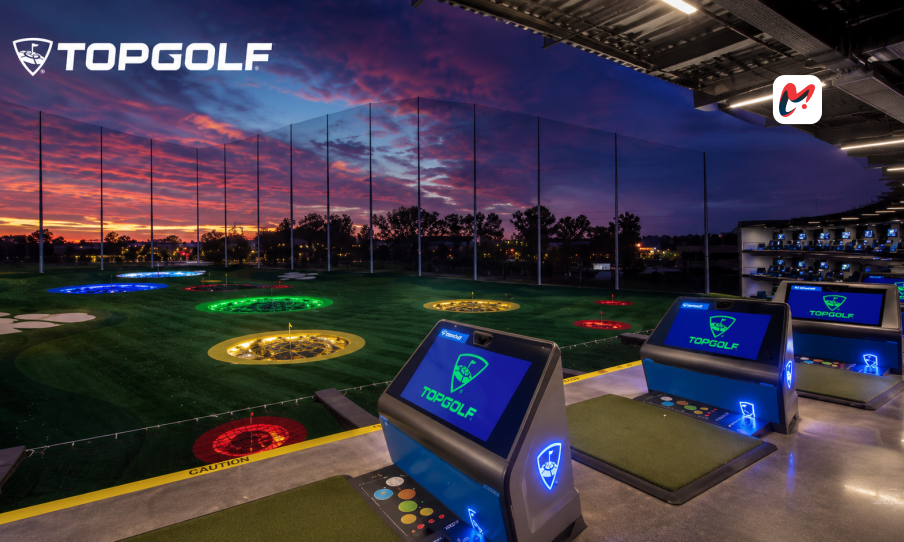
Out there among fresh takes on fun, old school country club scenes have faded fast beside today’s buzzing activity zones open to all kinds. Leading this shift stands a bold mix of sport and play that rewrote what hitting balls could feel like. Instead of quiet fairways, imagine bright lights, laughter ringing through air, sensors tracking each move. A once slow game now pulses with energy thanks to smart tools meeting lively hangouts. Starting as just one fix for awkward practice sessions, it grew wilder than anyone guessed. Now spread across nations, these spots pull in crowds by the million without slowing down. Hidden behind their rise? One tiny tech spark – an electronic nudge – that somehow lit up everything after.
The Beginnings and First Struggles of Topgolf
Out near London, a new kind of game took shape where old ideas got tossed aside. Back in the late nineties, two siblings named Steve and Dave Jolliffe saw things differently while swinging clubs at worn-out courses. Their annoyance wasn’t about skill – it came from hours spent on long holes and dull routines without spark. Instead of accepting that way of play, they looked toward tiny tech pieces just starting to appear in everyday items. Hidden chips slipped into golf balls made it possible to follow each flight with quiet precision. By 2000, their version of better practice arrived under open skies in Watford. What opened there didn’t copy tradition – it bent it sideways. Even with fresh ideas, old-school golf folks dragged their feet accepting anything new. Big names such as the PGA along with top gear makers pushed back hard, forcing the creators to show their high-tech version could work without help.
Expanding Beyond Golf Into a Social Entertainment Destination
Realizing that technology alone was not enough to guarantee long-term financial success, early leadership recognized that the entire business model needed to pivot toward a holistic hospitality experience. When the concept crossed the Atlantic to the United States, investors completely reimagined the physical venues by drastically expanding the kitchens, adding full-service bars, and building massive event spaces. This strategic shift converted a niche sports game into a dominant dining and social destination, which soon caused a massive surge in demand across major American markets. As massive venues began springing up from Virginia to Texas, the brand cultivated a highly energetic atmosphere where corporate events, birthday parties, and casual nights out could all coexist seamlessly. The stunning success of the Dallas facility, which rapidly generated legendary six-hour wait times, proved that top golf had officially cracked the code of modern experiential retail.
Technological Innovations and Global Expansion
As the brand grew exponentially throughout the tens, the parent company aggressively expanded its technological capabilities and broadened its market reach through major acquisitions. The corporation purchased revolutionary ball-tracking technology, which was subsequently rebranded as Toptracer, a system that now powers broadcasts for major professional tournaments globally. Alongside these technological advancements, the company diversified its media footprint by launching digital apps, social media walls, and original online video series to engage younger demographics. The meteoric rise of top golf did not stop at the American borders, as strategic joint ventures successfully introduced the high-tech entertainment venues to massive audiences in Australia, Germany, Mexico, Thailand, and the United Arab Emirates. Even as a high-profile corporate merger with Callaway Golf eventually evolved into a planned corporate separation, the core venue experience remained an unstoppable cultural force.
Operational Challenges and Strategic Adaptations
Navigating the competitive waters of international expansion and high-volume corporate management naturally brought a series of unique operational hurdles and strategic adjustments. Over the years, the corporate leadership had to navigate complex international joint ventures, fluctuating real estate markets, and the severe financial pressures of global economic disruptions, which occasionally led to the cancellation of highly anticipated expansions. Furthermore, as the company grew into a massive employer, it faced rigorous regulatory scrutiny regarding workplace compensation policies, resulting in substantial back-wage settlements for overtime violations involving sales staff. The brand also continually refined its core venue philosophy, eventually choosing to phase out its smaller indoor lounge concepts in favor of focusing resources entirely on their signature large-scale outdoor facilities. Through every operational shift, the underlying appeal of top golf remained firmly intact, anchored by its ability to deliver consistent fun.
The Lasting Cultural Impact of Topgolf
Ultimately, the spectacular global footprint of top golf serves as a powerful testament to the modern consumer demand for shared, interactive experiences. By successfully removing the steep learning curve and rigid etiquette of traditional golf, the company created an inclusive environment where a complete novice can celebrate a point-scoring drive just as enthusiastically as a seasoned player. The combination of automated scoring, climate-controlled hitting bays, and upscale food options turned the venues into community staples that bridge generational gaps. As the entertainment landscape continues to evolve, the pioneering spirit of combining gamified sports with top-tier hospitality ensures that top golf will continue to influence how the world plays, socializes, and connects for many years to come.