
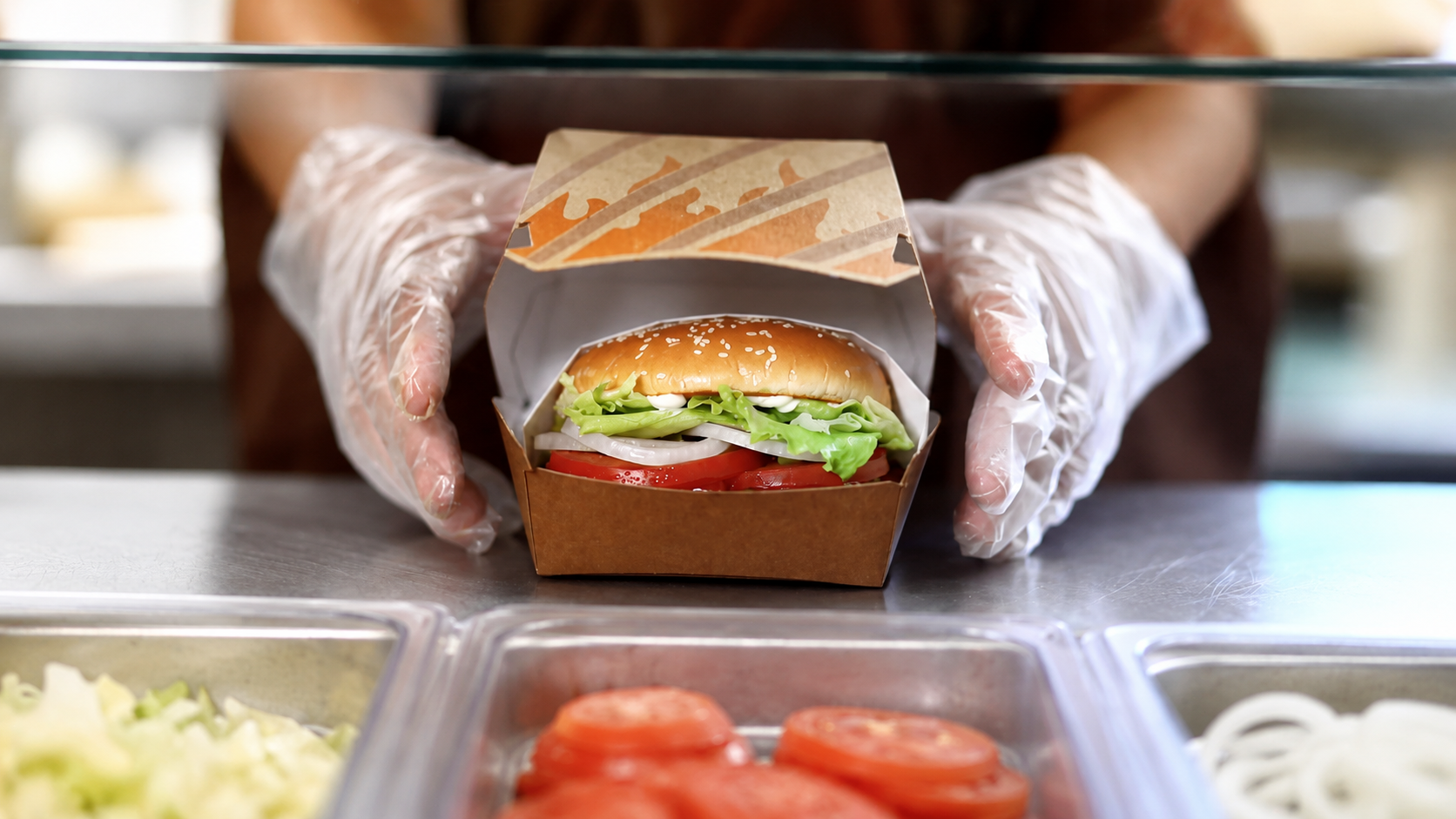
In the fast food restaurant business, to remain successful one has to continuously invest in new promotional offers and make changes to the company’s visual identity. However, beyond marketing and design, it is required to periodically renew the way the product is being delivered to meet the customers’ expectations. The fast food sector is currently seeing a significant increase in demands, which poses a challenge to many companies in the sector. In particular, for the major brands, such as Burger King, it has become necessary to adapt to changing consumer preferences, address rising costs, and provide higher quality of services in order to remain popular among the guests. Looking into the recent developments within the industry, the case of Burger king whopper changes could be used as a powerful example of how to restructure and improve services in the restaurant business.
The Whopper sandwich has always been a staple of the Burger King menu, as well as the key element of its brand image. Nevertheless, when it comes to delighting the customers, there is no such thing as too much. In its corporate e-mail to the guests, Burger King executive leadership has acknowledged the need to perfect the production process for the Whopper sandwich. For the company to continue to welcome satisfied clients, they have felt the need to step up the game. The management team recognized the importance of listening to the customers’ feedback and addressing the concerns they received. And the changes introduced to the Whopper production process and its quality control serve as a powerful reminder to other businesses of the need to remain attentive to the demands of the audience.
Listening to the guest’s opinion and adapting new technologies accordingly
Speaking of listening to what the clients say, it is important to consider the way the company communicates with the guests who order their sandwiches. Last year, the company announced an interesting initiative to keep track of the visitor’s feedback in real time. By calling or texting the number provided on the receipt, the customers could share their opinions directly with the president of the Burger King in North America, Tom Curtis. The purpose of the initiative was to give the clients an opportunity to share their concerns on a personal level. In particular, the company was seeking to understand the strong and weak points of their products and services. As such, the feedback would have become a useful guide for the continuous improvement of the restaurant sector.
This open line of communication revealed valuable feedback regarding food temperature, order accuracy, and overall service speed. Diners expressed that while they loved the classic flavor profile of flame-broiled beef, they expected consistent presentation and fresh preparation every single time they visited a drive-thru or walked into a store. Rather than dismissing these concerns, corporate executives recognized that real progress required embracing critiques wholeheartedly. Implementing burger king whopper changes based on honest consumer dialogue allowed the brand to target real operational friction points instead of relying on superficial marketing tactics.
The feedback loop also emphasized that customer expectations have evolved significantly in the post-pandemic quick-service environment. Speed alone is no longer sufficient to keep diners loyal; accuracy, heat, and freshness are paramount. By placing customer voices at the core of their operational roadmap, corporate leadership established a clear benchmark for success. These burger king whopper changes demonstrate that corporate humility and active listening can serve as powerful catalysts for meaningful operational reform in the competitive quick-service restaurant industry.
The Whopper Guarantee and empowering restaurant leadership
To demonstrate its confidence in product quality, the company introduced a major consumer-facing initiative known as the Whopper Guarantee. This program promises that any customer who receives a sandwich that does not meet their satisfaction can have it remade immediately, while also receiving a digital coupon valid for a free Whopper on a subsequent visit. The mechanics are streamlined for modern convenience: guests scan a QR code printed directly on the burger container to receive a unique digital code redeemable during their next order. By backing up their promises with tangible value, leadership sends a clear signal that product quality is non-negotiable.
Alongside the guarantee, the brand has reimagined store-level leadership by introducing the Your Way Champions program. This new operational role transforms traditional manager responsibilities, positioning designated staff members as primary customer advocates inside every participating location. These leaders are specifically trained to resolve guest issues instantly, oversee order accuracy, and ensure that every meal leaving the kitchen meets rigorous standards. The integration of Your Way Champions alongside burger king whopper changes underscores a multi-layered attempt to unite operational discipline with superior hospitality.
Empowering employees at the store level addresses one of the most common failure points in multi-unit restaurant operations: execution inconsistency. A corporate promise is only as effective as the team members assembling burgers on the front line. By pairing a bold money-back guarantee with enhanced staff training, the company bridges the gap between executive strategy and day-to-day store execution. The burger king whopper changes are therefore not just marketing headlines, but structural adjustments aimed at elevating the total employee and guest environment.
Brand elevation campaigns and recent financial turnarounds
The operational adjustments are complemented by a revamped marketing strategy aimed at restoring the brand’s cultural relevance. Moving away from eccentric advertising tropes of the past, recent national campaigns acknowledge past shortcomings directly while highlighting a renewed focus on guest satisfaction. A high-profile television spot entitled “We’re Here to Help” showcases executive leadership alongside real store team members, reinforcing the message that the chain is actively listening to its customer base. This shift in messaging reflects a broader industry trend where authenticity and transparency resonate more effectively with modern audiences.
This multi-faceted turnaround strategy is already yielding measurable business results. Following the launch of these strategic initiatives and the elevation campaign, the company reported impressive comparable sales growth during the first quarter, significantly outperforming broader industry benchmarks. Reversing previous sales declines proves that consumers respond positively when a brand takes concrete action to improve its core products. The positive momentum generated by burger king whopper changes illustrates how operational accountability directly translates into improved financial performance and market share expansion.
Financial analysts note that turning around a massive fast food network requires sustained momentum rather than short-lived promotional spikes. By anchoring the turnaround effort around their primary menu flagship, corporate leadership has established a stable foundation for ongoing menu innovation. The success of burger king whopper changes provides a viable playbook for other heritage quick-service brands seeking to revitalize sales in a mature and highly price-sensitive market.
Long term implications for fast food competition and growth
Looking ahead, the quick-service restaurant landscape will only become more competitive as brands battle for cost-conscious consumers. Success will depend on a brand’s ability to combine value, digital convenience, and undeniable food quality. The ongoing evolution of Burger King shows that long-term brand equity relies on fulfilling basic operational promises consistently. As additional menu updates and technological integrations are rolled out later this year, the foundation laid by these initial operational shifts will remain critical to sustaining consumer interest.
Ultimately, the journey to revitalize an iconic global fast food chain requires patience, significant financial investment, and unwavering focus. By empowering frontline store managers, directly guaranteeing sandwich satisfaction, and listening to honest consumer feedback, the company has set a high standard for brand accountability. These impactful burger king whopper changes demonstrate that when a legacy brand respects its core offerings and listens closely to its patrons, it can successfully reshape its trajectory and thrive in a dynamic marketplace.