
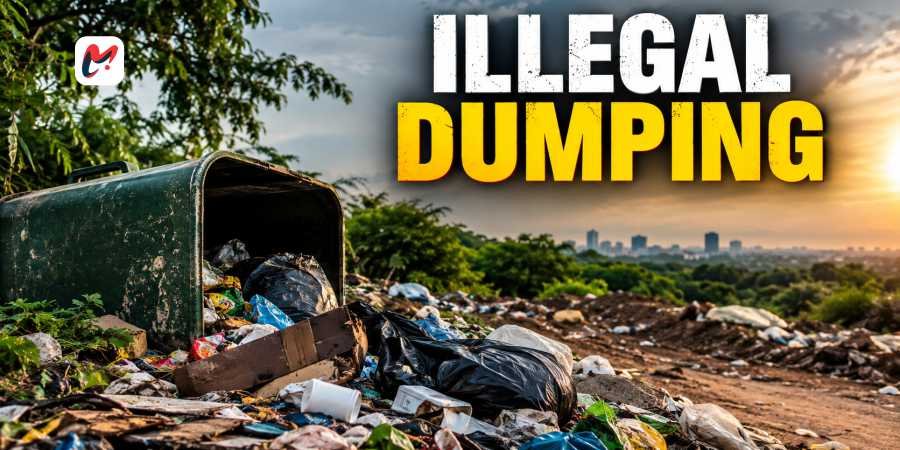
A pile of discarded furniture, plastic containers, construction debris or household waste can look like little more than an eyesore at first. The public health problem becomes clearer when that pile remains in place for weeks, grows with every passing day, and begins interacting with rainwater, soil, insects, animals and people. What appears to be an isolated waste problem can gradually become an environmental exposure problem for an entire neighbourhood.
Illegal dumping is particularly difficult because the contents of an unregulated site are rarely known with certainty. Ordinary household rubbish may sit alongside batteries, chemicals, tyres, electronic equipment, medical waste or construction materials. The U.S. Environmental Protection Agency notes that such sites can threaten public health, safety, property and quality of life, while accessible waste piles can expose nearby residents to physical and harmful hazards.
When Waste Becomes a Public Health Concern
The health effects of illegal dumping do not come from one single pathway. Waste can affect people through contaminated air, soil and water, while poorly managed organic material can attract rodents and insects. The World Health Organization’s 2025 report on solid waste and health identifies polluted air, water, soil and food as important routes through which poorly managed waste can affect human health. It also identifies children, pregnant women, informal waste workers and people living close to poorly managed disposal sites among groups that can face greater risks.
The problem can become more serious when discarded material is burned. Open burning is sometimes used to reduce the visible size of a waste pile, but it does not make the underlying problem disappear. WHO reported in 2025 that open waste burning can release air pollutants associated with coughing, skin irritation and respiratory disease, with exposure capable of producing both short- and long-term health effects.
This creates a difficult cycle. Waste attracts people looking for recyclable materials, children may enter an accessible site, animals can move through contaminated material, and smoke from burning waste can travel beyond the original dumping location. The boundaries of a dumping site therefore do not necessarily represent the boundaries of its health impact.
Water and Soil Can Carry the Problem Further
One of the less visible consequences of illegal dumping is contamination that cannot be identified simply by looking at a site. Rainwater can move through waste and carry dissolved pollutants into surrounding soil or groundwater. The composition of that contaminated liquid, often called leachate, depends heavily on what has been discarded and the conditions at the site.
Research in India illustrates why this deserves attention. A 2025 study examining groundwater systems affected by municipal solid waste in Bengaluru, Kolkata and Durgapur identified significant contamination concerns around the studied sites. Near Kolkata’s Dhapa dumpsite, the researchers found potential health risks associated with nitrate exposure, with children showing particularly high calculated risk in the study’s assessment. The researchers also reported heavy-metal pollution indicators above thresholds across sampled areas.
Another study examining four solid-waste dumping sites in Haridwar found contamination involving several metals and identified potential non-carcinogenic health risks through ingestion, inhalation and skin-contact exposure pathways. Such findings do not mean that every informal waste site produces the same level of contamination, but they demonstrate why the contents and location of a dumping site matter.
Respiratory Problems Can Become a Community Issue
Air quality is another important dimension of illegal dumping. Even without deliberate burning, decomposing waste can produce unpleasant gases, while dust from construction debris and disturbed contaminated soil can become airborne. Burning plastics, tyres or mixed household rubbish introduces another layer of concern because the resulting smoke contains multiple pollutants.
A 2025 study from Bloemfontein, South Africa, examined 200 residents living at different distances from illegal domestic waste dumping sites. Among participants living within five kilometres of a site, reported respiratory symptoms included coughing in 48%, shortness of breath in 23%, wheezing in 20% and chest tightness in 20%. The corresponding figures were lower among participants living five to ten kilometres away. The study was cross-sectional, so it cannot by itself establish that dumping caused those symptoms, but it provides a useful indication of the respiratory concerns reported by communities living near such sites.
The experience also shows why distance alone cannot determine risk. Wind direction, waste composition, frequency of burning, local drainage, population density and the presence of children or vulnerable residents can all influence exposure.
The Hidden Risk of Pests, Injuries and Disease
Another consequence of illegal dumping is the creation of conditions that support pests and disease vectors. Food waste, stagnant water and discarded containers can attract rodents and insects. WHO has linked poorly collected and disposed waste with increased proliferation of rodents and insects, while blocked drainage and standing water around discarded materials can create conditions favourable to vector-borne diseases such as dengue and malaria.
There are also immediate physical dangers. Broken glass, exposed metal, unstable debris, discarded needles and damaged electrical equipment can cause cuts, puncture injuries, falls or other accidents. The risk is especially concerning where an unmanaged site is accessible to children or where informal waste pickers handle materials without appropriate protective equipment.
Medical waste presents an even more serious scenario. WHO states that poor management of health-care waste can expose communities and waste handlers to infectious materials, toxic substances and injuries. About 15% of health-care waste is considered hazardous because it may be infectious, chemical or radioactive.
A Waste Site Can Become a Community Health Issue
The consequences of illegal dumping are often gradual rather than dramatic. A neglected plot can become a permanent waste site; a waste site can attract pests; rain can carry pollutants into soil and water; burning can worsen local air quality; and repeated exposure can place additional pressure on people who already have limited access to environmental services.
That is why illegal dumping should not be treated solely as a cleanliness or property-management issue. It sits at the intersection of environmental protection, sanitation, urban planning and public health. Communities need reliable disposal services, residents need clear information about the risks, and authorities need systems that identify recurring sites before they become entrenched.
Eventually, dealing with illegal dumping means looking beyond the waste that can be seen. The more important question is what happens after that waste is left behind, where its chemicals travel, what its smoke carries into the air, which animals it attracts and who lives close enough to be exposed. Preventing those pathways is not simply about keeping neighbourhoods attractive. It is about protecting the conditions that allow people to live safely and healthily.