
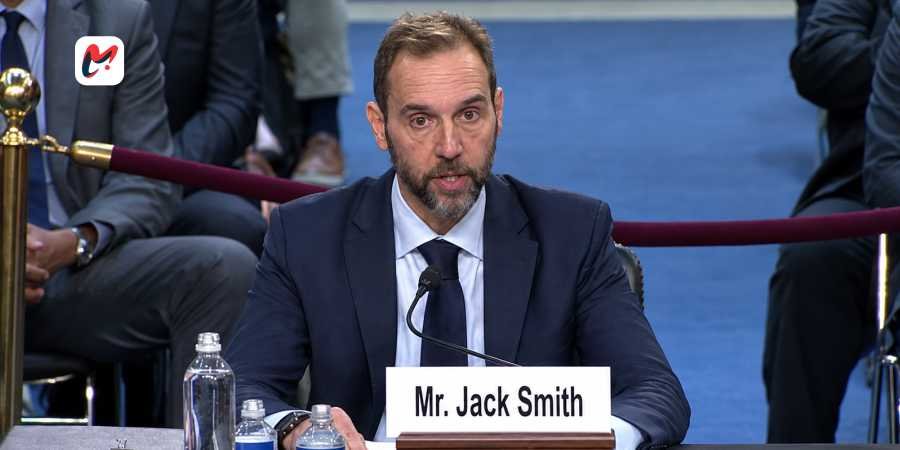
The September 29, 2026, Senate Judiciary Committee hearing featuring former special counsel Jack Smith was about more than the two federal cases he once brought against Donald Trump. Much of the questioning focused on how investigators gathered evidence, whether congressional and donor records were obtained appropriately, what authority Smith exercised as special counsel, and whether political considerations influenced prosecutorial decisions. Smith defended his work as evidence-driven and consistent with Justice Department rules, while Republican senators presented a different interpretation of his investigative methods and motives.
The hearing matters because the underlying disputes involve several complicated areas of American law. They include congressional protections, grand-jury and subpoena practices, presidential immunity, the authority of a special counsel, investigative confidentiality and the constitutional limits on federal prosecutors. Understanding those issues gives more context to the exchanges that otherwise looked like political confrontation.
Why Jack Smith Was Appointed in the First Place
Jack Smith was appointed special counsel by Attorney General Merrick Garland in November 2022. His mandate covered two major investigations involving Trump: efforts to interfere with the transfer of presidential power after the 2020 election and the retention of classified documents after Trump left office.
The election case eventually charged Trump with four federal counts. The classified-documents indictment contained 40 counts. Both cases were ultimately dismissed after Trump returned to the presidency and the Justice Department applied its longstanding position that a sitting president cannot be federally prosecuted while in office. Smith resigned in January 2025 after completing his work as special counsel.
That history explains why Jack Smith was asked repeatedly about decisions that could no longer lead to a trial. The Senate hearing was not a criminal proceeding against him. It was congressional oversight, meaning senators were examining how federal investigative authority had been used.
The Fight Over Congressional Phone Records
One of the most significant legal questions surrounding Jack Smith concerned investigators’ acquisition of telephone toll records involving members of Congress. Toll records generally reveal information such as the numbers involved in a call, the timing and duration, rather than the actual conversation.
Smith told senators that such records were sought because investigators considered them relevant to the election investigation. He also defended the use of nondisclosure orders, saying investigators had concerns about witness intimidation, destruction of evidence and interference with the investigation.
Republican senators questioned whether obtaining records belonging to lawmakers intruded on Congress’s constitutional protections, particularly the Speech or Debate Clause. That provision generally protects members of Congress from being questioned elsewhere about legislative acts. The difficult legal question is whether obtaining non-content communications records connected to an investigation constitutes an impermissible intrusion into protected legislative activity.
Smith rejected that interpretation in the hearing. The disagreement is significant because it goes beyond the particular investigation. It touches on how prosecutors can investigate people who happen to hold legislative office without improperly interfering with Congress.
The Arctic Frost Investigation
Another recurring subject was Jack Smith‘s connection to the investigation known as Arctic Frost. Senate Republicans have argued that the investigation improperly targeted Republican political organizations, lawmakers and donors. The Judiciary Committee has published records concerning subpoenas and telecommunications requests, and it has conducted several hearings examining the matter.
The committee’s Republican leadership has characterized the investigative activity as an abuse of prosecutorial authority. Smith’s response was that investigators were following evidence relevant to the alleged effort to interfere with the 2020 election and that political affiliation was not the basis for investigative decisions. Reuters reported that Smith said subpoenas involving lawmakers were connected to evidence investigators believed could help establish whether Trump’s circle had attempted to influence senators during the Capitol riot.
A central legal issue, therefore, is not simply whether records were obtained, but what investigators had to establish before seeking them, which officials approved the requests, what information the records contained, and how investigators limited their use.
The Special Counsel Authority Question
Questions about Jack Smith‘s legal authority also have a constitutional dimension. Trump and his lawyers previously challenged Smith’s appointment, arguing that the attorney general lacked authority to create and appoint a prosecutor with Smith’s powers without a specific congressional authorization.
That argument was litigated in the federal courts as part of Trump’s challenges to the election case. The Supreme Court’s 2024 presidential-immunity decision ultimately did not resolve every constitutional question surrounding Smith’s appointment, but the issue became part of the broader debate over how special counsels derive their authority.
The Justice Department’s special-counsel regulations provide a framework for appointing such prosecutors and define their authority, supervision and reporting obligations. Smith’s appointment therefore raised an important separation-of-powers question: how much prosecutorial independence can the attorney general delegate while remaining within the constitutional structure governing executive power?
Presidential Immunity Changed the Trump Cases
The legal landscape surrounding Jack Smith‘s election case also changed dramatically because of the Supreme Court’s 2024 ruling in Trump v. United States. The Court held that a former president has immunity from criminal prosecution for certain official acts, while unofficial conduct does not receive the same protection.
That ruling forced prosecutors and courts to distinguish between official presidential conduct and private or campaign-related actions. It became especially important in the election case because the indictment involved conduct occurring while Trump was president.
The issue illustrates why the hearing cannot be understood simply as a debate over whether a prosecution should have happened. Constitutional questions about presidential authority, executive immunity and the separation of powers became part of the legal architecture surrounding the case.
Why the Hearing Matters Beyond Jack Smith
The Senate hearing involving Jack Smith ultimately raised questions that extend beyond one prosecutor or one former president. How should Congress oversee federal investigations? How should prosecutors investigate elected officials without intruding on legislative functions? What safeguards should exist when investigators seek sensitive records? How much independence should a special counsel have?
Those questions do not have simple answers, and the hearing did not resolve them. Smith defended his decisions, while Republican senators presented records and arguments they said demonstrated improper investigative conduct. The Judiciary Committee continues to examine related materials, including subpoena practices and the Arctic Frost investigation.
The significance of Jack Smith‘s Senate appearance therefore lies less in any single exchange than in the legal tensions underneath it. The hearing brought presidential accountability, prosecutorial independence, congressional privilege, investigative secrecy and constitutional limits into the same room. Understanding those legal questions provides a clearer picture of what senators were actually debating, even where their interpretations of the evidence remained sharply divided.